Sunday, March 22:
I woke up at 2 am this morning. I took out all of the garbage and recycling. The garbage had to be separated into bio waste, plastics, cardboard, and mixed waste etc. I left my my coat rack. I was sad to leave the coat rack – a trophy for navigating my first bus ride to IKEA (at the time a nerve wracking adventure, where I was out past dark, with large language barriers). I gathered the last remaining items and squeezed them into my luggage. Leaving the key in the room, I etched my little apartment in my mind.
At 4:30 am Alex my taxi driver, picked me up and drove me to the airport. The taxi service told us the name of the driver and what vehicle he would be driving. He set me up with a cart for my three bags, and I headed to the check-in. There were only two clerks available to check us in. We were asked to not wait too closely to one another. One of the passengers must have annoyed the clerks because she suddenly announced to them that all of their carry-ons were oversized and the bags would have to be checked, and they would be charged. Flights were also being canceled – a small group could not fly to Amsterdam because their connecting flights were cancelled. So when I went to the counter I graciously thanked them for all of their efforts and I quickly received my boarding passes and headed toward security. Security personnel also would not touch any travelers belongings, and they kept warning each other, “Don’t touch their bags.” Otherwise the security went smoothly.
While waiting at the gate, another person whom I had met with Finland Fulbright was going back home to California. She was scheduled to complete her thesis this spring; instead she would be going back to California to live with her mother and brother in the San Francisco area. We talked while we waited for boarding. We were both worried about having enough time to catch our next flight. She only had one hour and 15 minutes, while I had an hour and 45 minutes.
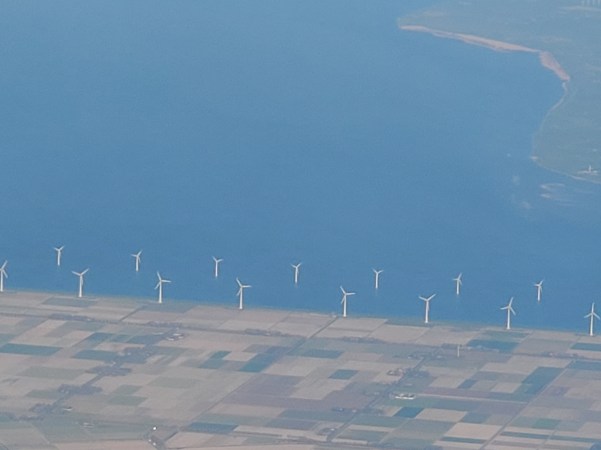
The plane was relatively full, more than I expected, in route to Amsterdam. The flight was supposed to take one hour and 45 minutes, but the pilot shaved a half hour of time off of the flight. Entering into the Netherlands, I admired all of the wind turbines along the coast.
In Amsterdam we had to go through passport security. We were reminded to keep our distance from one another. No one sat next to someone they did not know in the waiting area.
I was grateful when they called for boarding. I had upgraded my seats to sit in the Premium Select seats with reclining seats and more leg room. I had no seats beside me and to the left the row was mostly empty. The main cabin had more seats filled however. The crew was very accommodating, and the eight and half hour flight was incredibly comfortable. My brain was too active from all of the event changes, and I could not sleep. So, I watched three movies and ordered internet to communicate with friends.
Before arriving into Detroit we were asked to complete a form stating what countries we had traveled to. We were immediately escorted to a passport check-in where we handed in our forms. The border patrol official called out a number, signaling a personal escort to the CDC area. They asked me more questions about where I traveled, what duration, and reasons for travel. Upon taking my temperature, I was released and given a card about self-quarantine for the next two weeks including COVID-19 symptoms. I was then able to retrieve my luggage, where we were met by a working dog checking everyone’s luggage. I dropped off my luggage to be checked in to go to Moline and completed another security check, which is standard when flying in from overseas.
Walking through the airport was surreal. There were more security officials and CDC officers than passengers at the check in, and the rest of the airport seemed deserted. Restaurants sat empty and closed. Very few passengers sat at any gate ready for a flight. With a six hour layover, I watched several passengers board on flights with less than 20% capacity.
The flight to Moline had very few passengers, and at this point, I was too tired to count. I fell asleep before take off and woke up when we landed. Flying into a very small airport was relaxing. I asked a courtesy helper to help with the cart, and he put my bags on the cart, and I walked around the corner spotting my husband, Jim. I was happy to see him in his mask, and he greeted me by handing me a new mask. No hugs, just smiles. Walking to the car I was greeted with a white carpet, more snow than any snow event in Helsinki this winter. At home I was greeted by my dog Lucy and rabbit Einstein – both eager to see me. Lucy cried and wagged her tail for the next half hour, and Einstein snuggled into my face. It was good to be home
Saturday, March 21:
Friday, March 20:
Thursday, March 19:
Wednesday, March 18:
Tuesday, March 17:
Week 10:
Monday, March 16:
Sunday, March 15:
Saturday, March 14:
Friday, March 13:
Thursday, March 12:
Wednesday, March 11:
Today, I met with Laura Salo, a project designer from Innokas and coordinator from Growing Mind. Growing mind is a part of the Strategic Research Program of the Academy of Finland. The project coordinates Finnish teaching and instructional practice aligned with rigorous action-based academic research. The project focuses on the following six areas: 1) systematic longitudinal data on adolescent’s engagement and socio-digital participation, including neuroscientific studies of digital activity; 2) empowering learning and development; 3) implementation of engaging making and gaming projects at schools; 4) developing new generation learning analytics; 5) supporting teacher development and systemic school transformation; and 6) organizing multi-faceted research practice workshops. The project is coordinated with the Digitalization Project of the Helsinki City Department of Helsinki.
Tuesday, March 10:
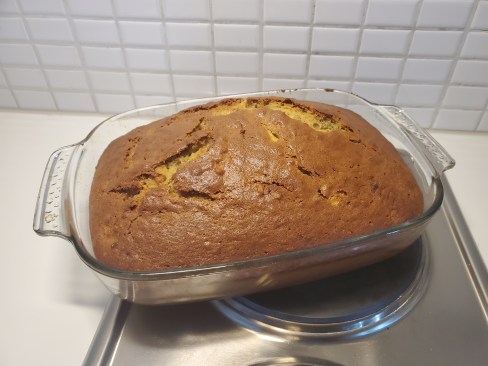
This morning, I made some banana bread and shared it with the rest of my Fulbright friends, Leland, Bill and his wife Jane, and Susan and her children. I gave most of thee remainder to Antti, my advisor, and his family. We would be meeting for lunch. With a limited kitchen and baking dishes, I baked the bread in a baking dish.
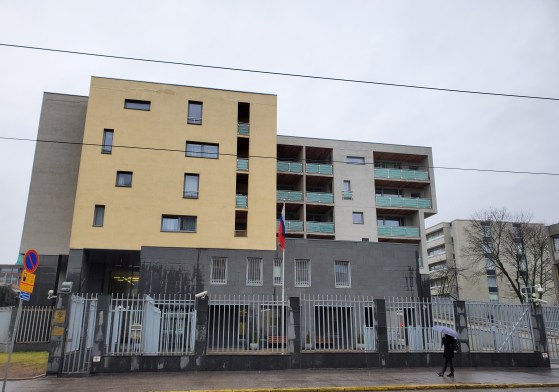
After breakfast Leland and I took the tram to a Russian tourist agency, across from the Russian embassy. In our Fulbright orientation, the United States State Department strongly recommended to not take a cruise to St. Petersburg from Helsinki. Cruises currently do not look very appealing now or ever in the future. Since Leland and I both wanted to go to St. Petersburg, we knew that we could only go if we acquired a visa. Leland is scheduled to leave April 30, and neither of us wanted to go to St. Petersburg alone. The process of completing the visa application took an hour between the two of us. We had to list our previous two employers, and our supervisors. Unsure if my previous supervisors were even alive and knowing that they left both the Minneapolis Public Schools and Stillwater School District, I looked up the current human resource directors and recorded their names and phone numbers off of the school district web sites. I requested an expedited visa, but Leland opted for the two week waiting period. My visa would be ready tomorrow; Leland would receive his in two weeks.
Leland and I took the tram to the train station. He had an appointment to go to and I was to meet Antti for lunch at the University of Helsinki. We kept each other apprised of what was happening. I told him about my trip to Ivalo, and I explained my love of the connections with the people and nature in Finland. Everywhere I go, in the city, or out in the remote areas, the natural environment is an integral part of the people and structures. I gave Antti some banana bread for his family, and we agreed to have lunch again soon.
Later in the afternoon, we received a message from the Fulbright Finland Foundation. The event Reflecting on Current Educational Leadership Practices and Themes in Finland and the U.S. with Fulbright Leaders for Global Schools Program Participants from the U.S. at University of Jyväskylä was cancelled on Thursday, March 19. In addition, the memo stated:
“The COVID-19 situation is dynamic. Given the speed of spread and the number of countries experiencing human-to-human transmission, it was important to evaluate the risks associated with choosing to maintain program and take the appropriate proactive measures. The Fulbright Leaders for Global Schools program participants would have come from the states that are more impacted by the COVID-19 and they would have had to travel to Finland with multiple flights. The potential quarantine situation or further spread of virus was too hard to stomach.”
At this point, I knew many more cancellations and changes would be coming soon.
I was honored when Antti’s wife, Mira, sent me an email asking for the banana bread recipe:
I talked Bill, Jane and Leland into going to a club featuring flamenco. I wanted to see a Finnish interpretation, and they had never experienced flamenco. Flamenco, Spanish folk music, developed over centuries in Andalusia; uncertainty remains over its origins. Although Spanish Gypsy people are credited with the development of Flamenco, other cultures over the centuries also contributed. In a flamenco performance there is usually singing, guitar-playing, clapping, and dancing. I provided a brief link of the flamenco dancing.
Week 9
Monday, March 9:
For most of the day, I worked on a two-week course that I was taking from Harvard University in an online program called Instructional Moves: Making Classroom Discussions More Inclusive and Effective. The online course provided strategies to encourage student ownership of classroom discussions and examined the role of the teacher in framing and conducting discussions effectively. The program provided approaches to boost diverse student voices in the classroom and methods for the teacher to integrate student contributions more purposefully. The course, complete with video and readings was probably the most informative professional development that I have ever encountered on engaging students in discussion. I hoped for methods to articulate questioning techniques that I currently use and ways to improve upon my instructional practice through discussions. I cannot wait to try out many of the methods.
Sunday, March 8: Happy International Women’s Day
Becci and I enjoyed breakfast together before her plane left for Helsinki. I noticed several women had received roses in honor of International Women’s Day. I hung around the hotel reading for most of the day, taking a walk on the river in the afternoon before I left. The ice was 80 cm thick, and it was snowing with a temperature of -5 degrees Celsius or around 23 degrees Fahrenheit. I also was able to try out the kick sled. If we could get more snow in Iowa, that sled might be ideal. On the way home from the airport, the moon was almost full. The cirrocumulus clouds allowed for a beautiful halo around the moon. I knew it would be cloudy tomorrow night, and I would not get to see the full moon.


Saturday, March 7:
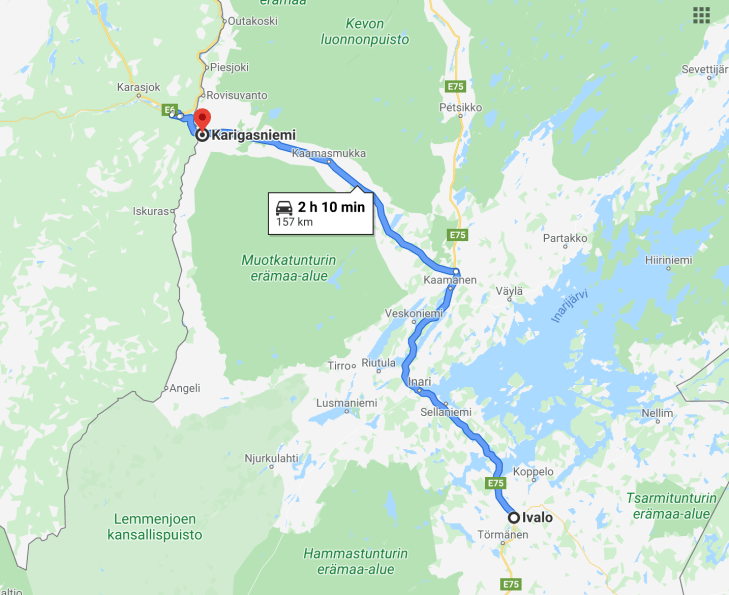
I told Becci about a photo safari that I would be taking. She was interested and contacted Jouni to join us for the day. We ended up traveling all the way to Karigasniemi, Finland on the border with Norway.
First Jouni drove us to the site where we tried to see the Northern Lights last night, where we could look at Lake Inarijärvi, the third largest lake in Finland. Jouni pointed out Ukonsaari island, which served as a burial ground of ancient Sámi people. The island is a place of worship for the Sámi people. The island was easily identifiable in the distance, standing 30 meters high.


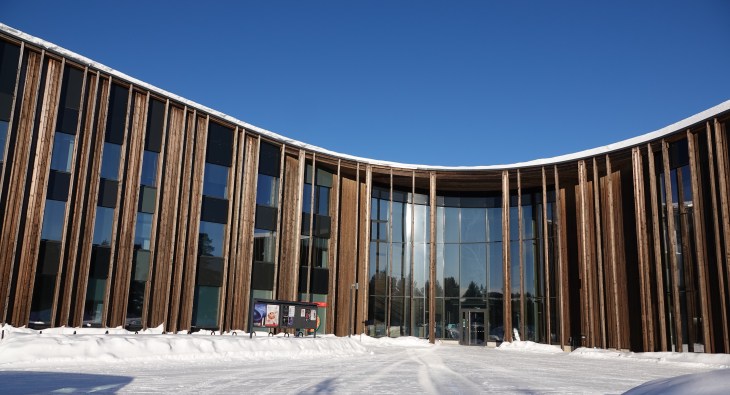
Jouni next drove us to Sajos, a Sámi cultural and administrative center located in Inari. The word Sajos means “the base”. The building houses the Sami Parliament of Finland, the Sámi Education Center, the Sámi Archives, and the State Provincial Office of Lapland. The building is a three-story building covered in white pine. The architectural design was inspired by the Sámi traditions with rounded corners. The building was not open during the weekend.
Next we drove to an area with some open water, and there we took in the views of a local cabin and sauna. I also saw a dipper. Dippers are squat starling-sized dark brown and white birds with short tails and sturdy legs usually found by swiftly running water. I noticed a duck house on the tree. The eggs used to be collected and eaten. Now the eggs are protected. The river was not very deep, but the water was so clear. The rocks could be clearly seen on the river bottom. Jouni said that the water is so clean that you can drink from the streams.


While Jouni was driving we were always looking for the reindeer and the moose. Many of the reindeer would be on reindeer farms with the Sámi. On the roadside we saw an ice fisherman skiing with an auger on his back.


We were able to see moose lying on the ground, or running. I captured a moose eating from the tree. The moose were more elusive and more difficult to capture with photos than the reindeer. When we stopped along the roadside, I admired the rolling hills, the forests, and the deep snow.


We drove a little further to the town of Karigasniemi, Finland. We drove across the bridge into Norway and ate a roadside lunch. Jouni had prepared a sandwich from moose salami, lettuce and cheese. The sandwich was delicious; I had never tried moose meat before. Jouni hunted the moose himself and had prepared the meat. He gave Becci and me a cup of cocoa or tea. I chose the cocoa, and Becca opted for the tea. We marveled at the river crossing. We watched some snowmobilers grooming the trails. Snowmobile tracks were everywhere. I was amazed at the amount of the snow on the roofs of houses. We took a few pictures of the area after eating and Jouni drove us to the Sámi Museum in Inari.


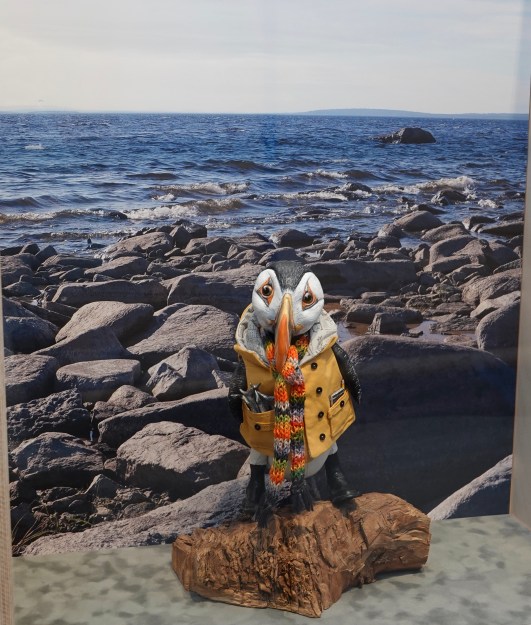
Siida is the Sámi museum, complete with northern nature, conservation and environmental perspectives and Sámi cultural exhibits. As you walk into the museum, we observed the temporary exhibit “Everyday life of the north, ” featuring the relationships between man and animals in the north. Guests are encouraged to think about the importance of co-existence including the similarities between humans and forest animals. I was intrigued by the puffin sculpture, wearing a vest with fish in one pocket and notebook and pencil in the other vest pocket, a hand-knit scarf, and boots.
Jouni pointed out a traditional fishing boat, where a motor had later been attached.

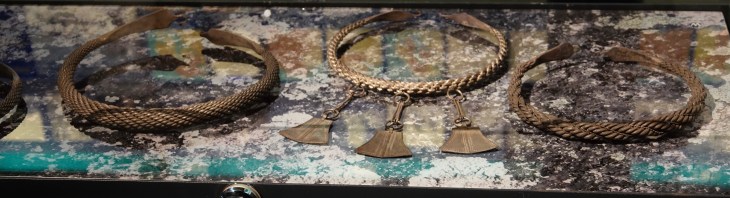
The first permanent exhibit that we entered told of the Sámi history and the events that impacted mankind in the form of a timeline from the Ice Age 20 1998 – when the Sámi Museum opened. I took a picture of the various Sámi languages. We could view a case of a silver treasure find from Inari – a local author discovered four silver necklaces placed on a birchbark bed in a long and narrow cave in Nangumiemi. Radioactive dating of the birchbark suggests that the necklaces were placed in the cave sometime between 1160 and 1280 A.D. Similar pieces had been found in Western Scandinavia and Russia.

As we entered the main exhibition, Jouni pointed out that we should view the outer sphere first. The outer sphere consists of 12 large nature photographs that showcase the changing seasons. As we walked around, month by month, we could hear the calls of birds, or the water running through the streams during the melting of the snow. We were able to identify the local wildlife that existed each season. During the winter months, the pictures were darker, distinguishing the level of sunlight. Basic climate data, including average temperatures and amounts of precipitation were included on our journey in the outer circle.
Even the sheds of the reindeer could be distinguished at different seasons, from a velvet, to where the velvet cracks off, and finally the bony branches. When the antlers are growing, they are covered in a fuzzy sheath of skin called velvet, lined with special nerves that carry the blood and nutrients to the bone. The velvet is very sensitive to touch, but after three months the blood stops flowing and the velvet cracks and peels. The bone of antlers have no nerves in them and are useful as weapons. The nerves in antlers regenerate each year, which is unique among mammals. Studying this regenerative process could help people who suffer nerve damage.
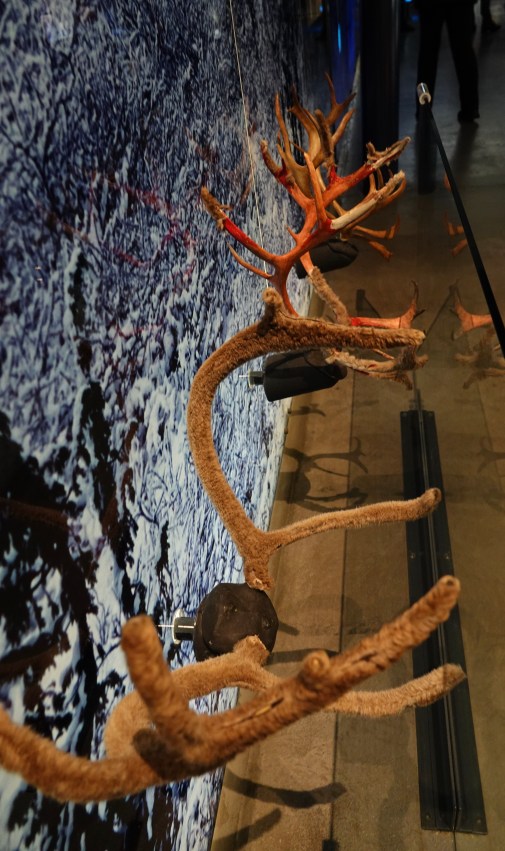
In the inner circle, we could see how the Sámi life and culture is linked to nature. As nature changes course throughout the year, so must the Sámi people – in their attire and how they live. Modern Sámi culture is also exhibited. In particular a snowmobile is featured because the mode of transportation has drastically changed the Sámi lifestyle.
Of particular interest was how the Sámi notch the reindeer’ ears. When a Sámi person is born, they are given a pattern of how to notch the reindeer ears. A family tree represented both the lineage of the family but also the reindeer notch markings of each family member. In addition the handicraft and intricate carvings of the bone on the baskets and the beadwork was highlighted.


In another area we could see the traditional attire of the Sámi. One current cultural problem is arising – women are identified as married, widowed or unmarried. Women, who live with an unwed partner, cannot wear the traditional hat. Likewise, same-sex relationships are not recognized by old traditions.


Jouni drove Becci and I back to the hotel around 5pm. We had a great day, complete with connections to nature and culture from a local perspective. Jouni told me about another adventure that he is leading to see the puffin migration at the end of the month on a remote island in the Arctic Ocean off the coast of Norway. I would really like to go.
Friday, March 6:
An early start, I left the apartment at 4 am and walked to the train station. I took the train to the airport and flew to Ivalo, Finland, in the arctic circle (1100 km north of Helsinki or 684 miles). If I took the bus, it would take 18 hours to travel. I was impressed by the large snow removal equipment at the airport. The plane seemed so large in comparison to the airport. I was also impressed by all of the forests as we approached Ivalo.


I took a taxi to the Hotel Ivalo – a fare of €26 for 9 km. Upon arriving I checked in and booked a reindeer excursion. The hotel provided and recommended snowmobile suits to protect our winter gear. The temperatures were relatively mild, only -6 degrees Celsius or 21 degrees Fahrenheit. Last weekend the temperatures reached -28 degrees Celsius or -18 Fahrenheit. I was glad to have picked this weekend.
Two vans came to pick up our group from the hotel to take us to the reindeer farm. Members of the group included some German, Dutch, French, and two US Americans. The other American, Becci, who I had just met when she asked if I would take her picture, resided in Greece.
We were given instructions to keep our arms in the sleigh the entire time. Also we were told that if we dropped anything, there would be no stopping. We were covered with blankets and rode the sleigh for about forty minutes. When we went down a slight incline, our reindeer looked a little stressed, arching his head into the air. He did not want the sleigh to hit the backs of his heels. The reindeer compromised by subtly veering the sleigh toward the snow bank to prevent the sled from hitting his heels. The reindeer and sleds were all connected by ropes, with a lead Sami in front. The scenes were so quiet, with the snow crunching under the runners of the sleds. Large mounds of snow could be seen on the tops of trees, sometimes bending the tree.
Upon our return we fed the reindeer lichen. They were eager for the treat. When the reindeer were fed, the lichen had to be held up at the level of their head, and I had to watch out for their antlers. Only the males lead the sleighs. The females are all pregnant. The babies would be born in late May and June. The males lose their antlers, starting in the fall. Some of the sheds can be massive. The females retain their antlers year round.
We were invited into a lodge where a Sámi woman explained the Sámi culture and raising the reindeer. We were provided a cake-like bread and coffee or tea. She displayed the traditional clothing, and also explained that the fur of the boots made of reindeer fur parted in different directions to prevent slipping. The traditional boots were stuffed with straw to absorb moisture, and the boots were tied with woven belt around the ankle. The Sámi took great pride in their culture on the reindeer farm and were eager to share their traditions.


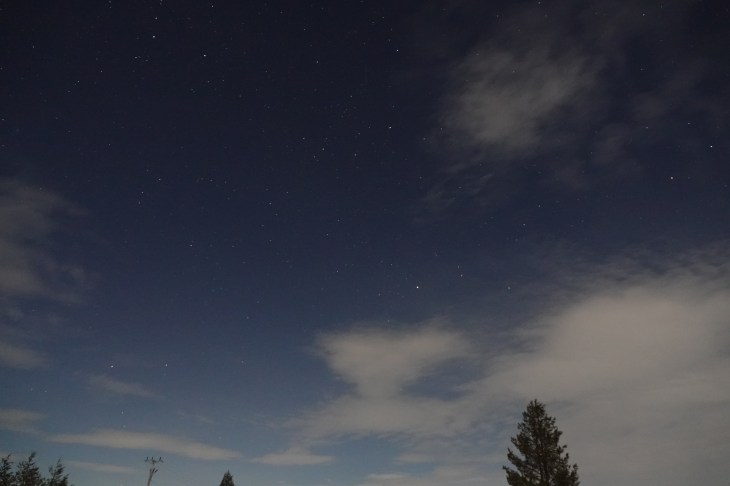
Later in the evening, around 8 pm, a local photographer, Jouni Männistö picked up Becci and I to see the Northern Lights. Also joining us were a couple from Singapore and a couple from Italy. The couple from Singapore joked and told us not to gasp at the couple from Italy due to the Coronavirus. We set up the cameras with delayed settings. Unfortunately, we were unsuccessful at spotting the Northern lights, but I was impressed with seeing the Big Dipper, Cassiopeia , Orion, and the North Star at different positions in the sky. I have included a photo of the night sky. We waited until around midnight, but had no success.
When I arrived back at the hotel, I saw a message from the Muscatine School District, where I teach. Being proactive, our school district had canceled all international school trips for the remainder of year. Most Finnish schools had already canceled trips throughout Europe as well. I have been monitoring the numbers of cases worldwide for over a month, relying on the Worldometer website.The situation varies for each country and the politics vary as well. I was supposed to meet the students in Prague next weekend, but I canceled my trip to meet them.
Thursday, March 5
This morning I took the train to the Leppävaaran asema (Leppävaara Train Station) in Espoo. There I met Mervi Samuelsson, an English and Swedish teacher at Viherlaakson lukio (Viherlaakso Senior High). She drove me to her school, where I would discuss Iowa culture with the students.
Mervi participated in the Fulbright Teacher Exchange program where she spent a year in Delta, Ohio teaching 7th grade English at Delta Middle School in Delta, Ohio in 1995-1996. Mervi asked me provide a session about American everyday life and celebrations. I also made the students some banana bread, one of my favorites to share. Merve introduced me to her colleagues and we enjoyed coffee, breads and fruit before meeting with the students.
Twenty-five students were enrolled in the session, but one student was absent. I asked the students to provide their conceptions of American culture before I began. I knew that would be difficult for some students because I was asking them to speak English. Most students spoke English very well, while some struggled with a nonnative language. I provided them with activities in my life, life of a student in our school district, the variety of activities that are offered in our school district, agricultural life in Iowa, the Iowa State Fair, Iowa and politics (including many of the presidential candidates visiting our state last fall), RAGBRAI (a bike ride across Iowa), and other Midwest activities. The students realized that the United States is not just about pop culture, and they said they thought about the United States differently. I reminded the students that the United States is a very large country, made up of people with diverse interests, and I cannot solely represent the entirety of my country, just a sliver. I offered them the banana bread, and explained the ingredients for students who were lactose or glucose intolerant. Also, many students are also vegan. All of the students, who tried, the bread, enjoyed the banana bread, or at least they were very polite.
We broke for lunch where I was able to eat a school meal. The teachers stated that usually the food is tastier, but I had not problem. I ate mostly the salad, and vegetables. I was reluctant to try the little herring-like fish – they just did not look appealing.
After lunch I shared some of the activities that I ask my students to complete in the United States and explained my Finland Fulbright inquiry project to the students. Recognizing their unique interests, I asked them to find some aspect of Iowa life that appealed to them. Some students were looking up NASCAR racing, celebrities (singers, actors, athletes), or the University of Iowa basketball program. I enjoyed hearing their ideas.
Some students gave me a tour of their school. Currently, the two senior high schools are housed in a temporary facility due to mold problems. A new school is being constructed, which may be ready in a year. Around 300 students attend their high school. The focus of Leppävaaran asema is the arts and theater, but not every student is enrolled in theater or arts as their primary interest. I asked the students about their favorite part of school; they unanimously declared that the 15 minute break between classes was their favorite part – whether hanging out on the couch with their friends, playing pool, or of a game with a small ball and goal. I asked if the students ever had conflicts during the break time, and they indicated that fights never happen. I was very impressed with the students willingness to showcase their school, their artwork, and their genuine desire to explain their Finnish school culture.

After the students left, the instructors and I enjoyed coffee and cakes. We read through the student feedback – all seemed to indicate a positive feedback. Mervi asked if I would like to visit her school again and possibly visit the science classes as well. I indicated a strong interest, and I hope to visit again.
Mervi drove me back to the train station with her colleague, who had an appointment. On the train ride back to Helsinki, I saw my friend Sage Borgmästers, from the STEP program at the University of Helsinki. She was getting ready to take an exam. I walked with her to campus, and we sat and talked for the next hour. She recommended the book Finnish Lessons 2.0: What can the world learn from educational change in Finland by Pasi Sahlberg. I wished my friend luck on her exam as I headed back to the apartment. Sage will be student teaching in Helsinki until March 31 and then she will be able to teach in Finland, even though she has taught in Belgium, and the United States, and she is an AP reader. She suggested that I come visit her and her family in Vaasa.
Wednesday, March 4
I had intended on walking to the university this afternoon, but as I stepped outside the wind was blowing snow and sleet horizontally. Today was by far the worst weather I have experienced in Helsinki, and yet, it was not that bad. I just was not in a mood to traverse through the city, and I opted to work/study remotely. I later learned that strong winds and snowfall, combined with the warmer temperatures, caused major travel disruptions in Helsinki. At the Helsinki airport, flights were delayed or even canceled due to the bad weather. The Finnish Meteorological Institute warned that visibility could remain poor through tomorrow.
Tuesday, March 3
I completed my presentation this morning for the Fulbright Forum, a seminar that provides an opportunity for American Fulbright recipients, teachers, scholars, or graduate students, to showcase our projects and research in Finland. The forum will take place March 16 and 17 at the University of Helsinki and Haaga-Helia University of Applied Sciences.
I took the tram to Helsingin luonnontiedelukio to observe Panu’s physics class this afternoon. Although the students meet three times per week, 75 minutes each, the classes do not always meet at the same time. Today the students were asked to select a white board and draw a particle model to represent their observations from yesterday’s lesson. The student were asked to create conceptual models to make predictions and provide an explanation for an event.
Modeling builds on experiences and requires students to use, synthesize, and develop models to make predictions and show relationships between systems in the natural and designed world. Yesterday, the students were asked to relate temperature and pressure and volume and pressure. Today, the students were to draw the relationships and provide written descriptions of their observations. The models also allow predictions to be made, and the models provide accounts for observed phenomena. For example, Panu held a bottle outside, and the bottle collapsed. The students were required to draw a representation and provide an explanation for the event.


After Panu’s class we briefly discussed more opportunities for classroom visits in April. I shared with him some questions that I would like to ask the students in regarding to changing perceptions with more engaging activities. I also showed him my Fulbright presentation. Panu seemed to like it; he asked me to share it with him.
On the way back from the school I went directly to the Oodi library. Today, I could vote in Finland’s first Global Presidential Primary. I could either vote in person or remotely, but I wanted to participate in my first global primary. Voters must be 18 years of age by November 3, 2020, an American citizen, and cannot participate in their state’s presidential primary. In person voting took place today from 4 pm to 8 pm and will also occur on Saturday, March 7 from 1 pm to 5 pm.
I saw a young man from California providing the directions to the voting – on second floor where a room was reserved. I arrived shortly after 4 pm. There were other eager Americans ready to vote. We cast our ballot and placed the ballot in the box. Members of the press were interviewing the primary volunteers. I was very eager to observe and be apart of the process.


Week 8
Monday, March 2
Johanna texted me just as I was about to catch the tram. We were going to observe some physics lessons at Helsingin luonnontiedelukio (Helsinki School of Natural Sciences) from Panu Viitanin’s class. His lessons this week would focus on gas laws. I would be able to attend lessons today and tomorrow, but I would not be able to see his classes Thursday.
I had met Panu in January at the US – Finnish Partnerships for International Research and Education (PIRE), “Learning Science Answering the Challenges for the Future of Science Education.” The new book Learning Science: The Value of Crafting Engagement in Science Environments by Barbara Schneider, Joseph Krajcik, Jari Lavonen, and KatarinnaSalmela-Aro was introduced. The book just came out mid-February, and I was able to acquire a copy.
The book addresses major reforms in science learning and instruction, including making sense of phenomenon, and finding solutions to problems using three-dimensional learning, in the United States framework for K-12 science education and the Next Generation Science Standards (NGSS). Three dimensional learning ties disciplinary core ideas, the scientific and engineering practices, and cross-cutting concepts together. The Finnish curriculum and models o learning and instruction also emphasize the design and use of science and engineering practices to support students in learning science and to make scientific careers more appealing. Although the Finnish students score well on the PISA exam, people under the age of 30 have a reduced interest in entering science careers. The European commission has also expressed an awareness to cater to the needs of young people and suggests that science in schools should better reflect the scientific and engineering practices.
Problem-based learning is a proven method for students to meet important learning goals and construct meaning to a compelling question. Using scientific practices, students can explore phenomenon utilizing science and engineering practices and create a collaborative environment to find a solution to their compelling question, producing some form of evidence that assesses the three dimensional learning.
Using the methodology described in Learning Science: The Value of Crafting Engagement in Science Environments, Panu asked his students to complete a series of labs to describe the gas laws using Vernier equipment. Panu’s class consisted of 30 students, half were female and half male. This physics course is the second 6-8 week physics course. Each course lasts only 6


– 8 weeks, with three 75 minute class periods each week.
Panu asked the students to use a plastic syringe, Vernier pressure probe, Vernier temperature probe and determine the relationship between the pressure and volume and the relationship between temperature and pressure. The students were able to conduct the experiments with their personal computer and the Vernier equipment.
In the next physics lesson students were working on problems with resistance, potential difference, and current of series and parallel circuits. Since all the tests, and homework are computerized, the students are required to complete all homework sets on the computer. In the picture above the students are creating schematic diagrams with the computer and NSpire program.
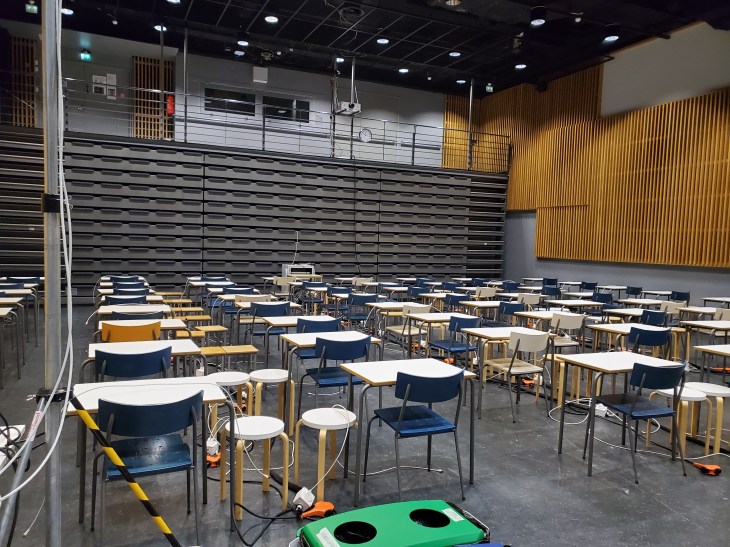
Afterwards, Panu gave me a tour of the building, including the rooms where the matriculation exams will be held. All testing is completed on the computer. The 3rd year (Senior level) high school students were no longer in the schools and were preparing for the exams. The tests last a week, six hours each day. The students must pass the exam to earn their white cap to graduate from high school. All students graduating from high school can go to the university for free.
Sunday, March 1
Leland, Bill, Jane, and I had thought of going to Turku today, but the weather was rainy and we opted for another time. Instead I stayed back and worked on some presentations and reading. Later in the afternoon, I walked to the city center to purchase more coffee from Starbucks, where they grind the beans for my French press. I also purchased some facial sunscreen since I am planning to travel to Lapland next weekend. The reflection from the snow can be intense. I had to have some skin cancer removed last December, and I really do not want to go through that procedure again – therefore the sunscreen.
Saturday, February 29,
Bill, and his wife, Jane, and Leland and I met for breakfast. We decided that we would attend a barbecue festival taking place in Helsinki. Leland sought out places with American barbecue and recommended the restaurant, B-Smokery. Before eating we watched a little of a barbecue sauce tasting event. I ordered the wings, Leland had the brisket, and Jane and Bill each had the pulled pork sandwich. The food was good, with a hint of cardamon in the sauce. The barbecue was tangy, but not spicy at all. Afterwards, we went to a distillery, and Leland was able to acquire some of the product made at the distillery. It was fun to hear country music with some men wearing American cowboy hats.


Friday, February 28:
Reading all morning, I went out for a walk along the bay, crossed the bridge to Seurasaari, now one of my favorite parks. On the way I walked past the former President of Finland’s home, watched a young group of German speaking people unsuccessfully attempt to break the ice with a log, and muse at the queue at the bakery/coffee shop. As I was rounding a corner on the other side of the island, I suddenly saw a large hawk flapping its wings in a tree. Screaming from the tree ensued, and the hawk abruptly retreated and flew away. A tall, Finnish man, equally amazed, began speaking to me in Finnish. In English, I explained my lack of understanding, and he immediately started to speak to me in English. A squirrel with tufted ears, peaked around the corner at the moment, and started to meow like a cat. Then scratching at the tree, tap, tap, tap, the squirrel mewed more, following with tap, tap, tap. I felt the squirrel yelling out, “Did you see that? I was almost killed by that hawk?” With the continual mewing, tapping, and circling around the tree, I couldn’t help to think that the little animal was trying to communicate. The Finnish gentleman and I watched in awe for several minutes, and the little squirrel repeated its attempts to call out to us with tapping, mewing, and circling. I continued to watch a little longer, and then I said good bye to the little squirrel. I wished him well, and told him to be careful, and I was glad he survived that ordeal.


I enjoy the connections to nature in Finland, and being in a small country that does not feel so small.
In the evening, I noticed that the sky was clear, and Venus could be viewed along with the moon from the balcony on the floor of my apartment building. Even with the city lights, I enjoyed looking out over the bay to marvel at the brightness of the moon and planet. 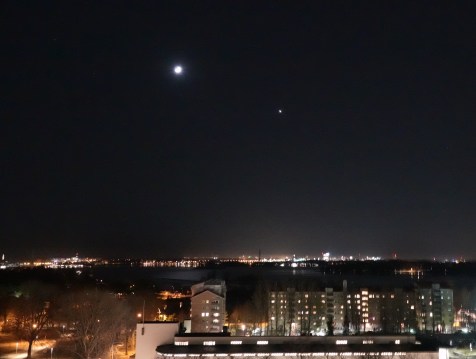
Thursday, February 27:
I visited Sotunin koulu again today, following the biology teacher, Pasi, in the upper secondary school. In the first class of fifteen students, I observed the students reviewing the following topics. This biology class was level 5 of 7. One student was absent during a lecture, so his fellow classmate was walking him through the material and they were studying together. Other pairs of students created concept maps to tie the material together.
- the most important enzymes used in genetic engineering
- PCR
- electrophoresis
- reverse transcriptase (blotting or isolation of all mRNA molecules from a tissue sample)
- how to create a cDNA gene library
- asymmetric PCR or how to produce ssDNA
- DNA sequencing by the Sanger method
- gene probes, GFP, and in sutu hybridization
- vectors
- how to create a genomic gene library
- DNA parallel or shotgun sequencing
- DNA tags
- Crispr with Cas9 method and variants
- monoclonal antibodies
- RNAi and what are the associated DICER and RISC cartridges
As a genetics major, I was completely impressed with the level of material covered. This is what I learned in college and many techniques have been developed recently.
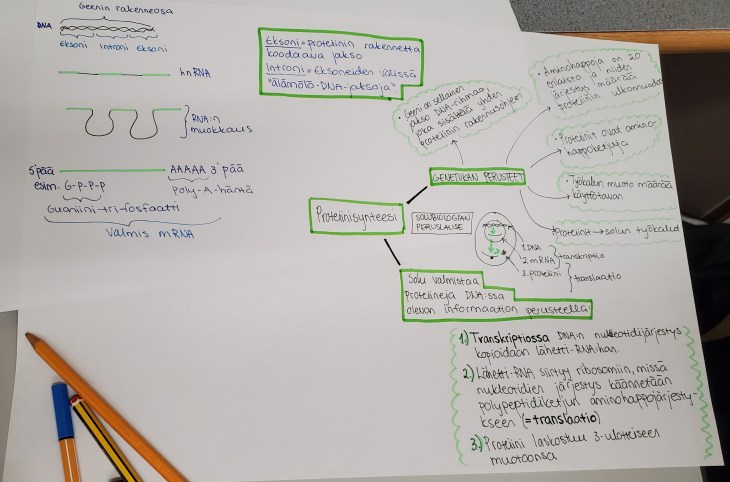
In the next lesson, students also covered genetics in their first biology course, grade 10. Although the students were not as clearly motivated as the previous group, the students sang out in Finnish the genetic base pairs in a rhyming sing-songy effort. Pasi and I were like-minded – using song or any creative means to inspire the learning of the students. I was easily entertained.
Another method that Pasi used were conceptual drawings of amino acids. Instead of drawing out the amino acids, one could draw a figure around the amino acid to represent the formula. I included the example that he gave to the students. Students are not required to memorize the amino acids, just key ideas. In addition Pasi encouraged his students to sing and dance to review the material.


He came up with the idea based on the annual Wife Carrying Competition held each July in Sonkajärvi, Finland. The history of the competition is based on “Ronkainen the Robber”, a 19th-century legend of Herkko Rosvo-Ronkainen. There are three different stories as to the origin of the sport. In the first story, Ronkainen the Robber and the members of his gang were accused of stealing food and women from villages, throwing the women over their shoulders as they ran away. In the second version, Ronkainen and his gang would steal other men’s wives and then take the women as their own wife, carrying the women off on their backs. In the final version of the story, Ronkainen trained his thieves by carrying heavy objects on their backs to make them stronger.
The modern race allures around fifty husband-wife teams where the husband carries the wife through a regulation obstacle course with log hurtles, sand traps and a water obstacle. According to the rules, all participants must enjoy themselves. Couples don’t have to be married: a participant may carry his own wife, his neighbor’s wife, or someone he found from “further afield”. The wife must be at least 17 years of age and weigh a minimum or 49 kg (108 lbs) or rucksack containing additional weight to bring the total load up to 49 kg will be added to the wife. The winner is the couple that completes the course in the shortest amount of time, and the winning couple receives the weight of the wife in beer.
In the next class, I observed the students dissecting a fish in the comparative anatomy of vertebrates, biology 7 course. Only eight students, six females, attended the class. The students identified the parts of the fish. In a previous class the students identified the parts of the skull of a the fish and labeled the skeletons.


Wednesday, February 26:
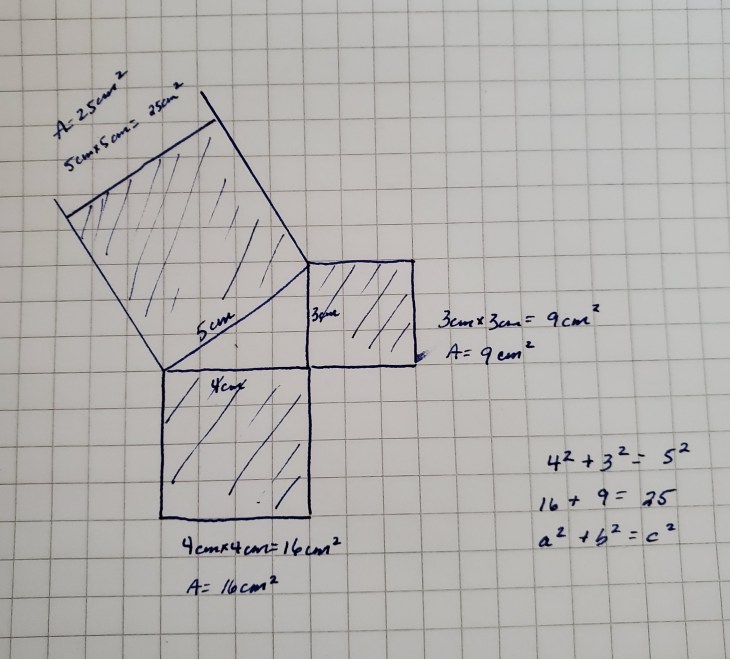
Today I visited the Sotunin koulu, focusing on math and physics lessons. I observed the math and physics teacher, Jussi. The first lesson was a grade 8 lesson on the Pythagorean theorem. All the students pulled out their graphing composition notebooks and took notes. Students were warned to put away their cellphones and most complied. I like the way the material was presented using area, versus just a formula. The students could then conceptualize where the formula came from. Once the material was presented, the students performed some guided practice with Jossi circulating the room to ensure understanding. Then he gave the students some independent practice. The lesson lasted 45 minutes. The students were all engaged in problem solving and note-taking. At the end of the lesson, students played a Kahoot to review the day’s material.
The next lesson was grade 7, with a focus on arithmetic and geometric sequencing. The grade 7 class was not as focused as the grade 8 class. Several student wanted to use their cell phones versus participate in the lesson.
I think cell phone usage is becoming a worldwide problem. Parents need to become more aware of the content that their child is viewing. Difficult conversations about appropriate and inappropriate material need to be made. Parents should be aware of the apps their children are downloading. There seems to more reliance on schools to have these hard discussions with children: life, relationships, bodies, their future etc. Without these conversations, the students have a difficult time coping with topics that they are not capable of appropriately processing on their own or with their peers.
After lunch I observed the 8th grade physics course. Jossi reviewed the interaction between electricity and magnetism via the Right Hand Rule. In the Right Hand Rule, if you point your thumb in the direction of the current and let your fingers assume a curved position, the magnetic field circling the wires flows in the direction that your fingers point. Using a rod, and his hand, Jossi demonstrated the Right Hand Rule. There were about 15 students in the class, most very quiet and not very participatory during the lesson. Most of the class was lecture based with some demonstrations.
A fun way to ignite student interest would be to encourage students to build speakers from round magnets, coiled wire, yogurt containers, D-cell batteries and a radio. Students could explore the properties of magnets, create electromagnets, and determine the direction of magnetic fields. Students could complete an investigation by changing the direction of the charge. This would meet a Next Generation Science Standard, MS-PS2-5.Conduct an investigation and evaluate the experimental design to provide evidence that fields exist between objects exerting forces on each other even though the objects are not in contact. (Grades 6 – 8)
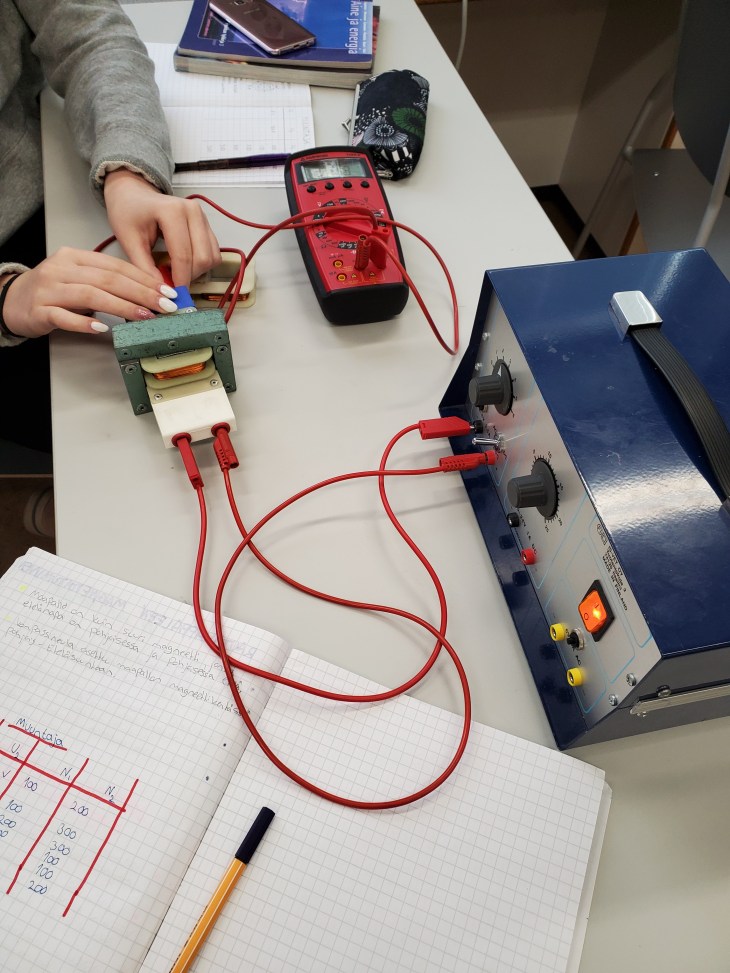
In the last class today the 9th grade students were also learning about electricity and magnetism. The students performed a lab where they connected an AC voltage source to transformers and a meter. The students were to create the table and record the data based upon changing the number of loops in the transformers and/or the voltage. The ration of secondary to primary voltages in a transformer equals the number of loops in their coils. The output voltage of a transformer can be less than, greater than, or equal to the input voltage. A step-up transformer increases the voltage, and a step-down transformer decreases voltage. Students could observe that the ratios were not perfect due to resistance in the wires.
This is an introduction to electricity and magnetism, and students are only required to understand the concepts presented. I wondered if video representations were also shown to augment the lesson. I found a good video on You Tube.
Tuesday, February 25:
Today I traveled to Vantaa to observe the Sotungin koulu. The school is about 19 km north of my apartment and takes about an hour by bus to arrive at the school.
The school houses grades 6-12, with around 400 upper secondary students (grades 10-12) housed separately from the younger students. At the final stages of the basic comprehensive education (grade 9), the student counselor and teachers guide the students in their educational selection based on their own abilities and interests, usually grades and sometimes tests or extracurricular activities. The students may choose to attend either an academic track or vocational track, both usually take about three years and provide a qualification to attend either the university or university of applied science system.
At the Sotung Upper Secondary School, the students can independently focus on their goals, emphasizing either mathematical, social sciences or humanities coursework. Arts and crafts (fine arts, music and exercise) are an important aspect of the student growth. The combinations of coursework, in conjunction with the subject teachers, are designed to prepare the student for post-secondary options. This school is primarily known for being a sports school.
I was able to observe Mira’s grade 7 health class. The students were required to make a poster, a video, or present a rap or poem on what a healthy ways to spend the day. Most of the students were engaged in the activity. I was surprised by that the boys separated from the girls and did not work together. Many of the boys left the class to make videos on the phone. Mira provided each group constructive oral feedback to improve upon their presentations. Some groups were very articulate, expressing detailed concept maps while others showed videos performing tricks with their kick scooters (but did not discuss aspects of a healthy day). The atmosphere was very laid back, with students addressing the teacher by her first name. The lesson only lasted 45 minutes with a 15 minute break.
I observed a grade 7 English lesson next. I introduced myself briefly. The instructor checked to see who had completed the homework, and then the answers were corrected in class. The theme of the lesson was chores that students had to complete at home. In addition to completing the workbook assignment, students were tasked to communicate with one another household chores.
Lunch was eaten early, around 11:00. Next I observed a religion class. Topics discussed were Feng shui, a traditional practice, originating from China, which claims to use energy forces to harmonize individuals with their surrounding environment. Taoism, polytheism (a belief in more than one god), and the Kitchen god were also topics of discussion. Relationships in society, ruler and subordinate, husband and wife, elder friend and younger friend, and father and son were presented as well. A few students were very engaged in the discussion. Many students struggled focusing due to their cell phone usage.
In another religion class, grade 8, the students worked in groups in stations to complete tasks assigned by the instructor. Almost all of the students participated in the activity that correlated with a reading assignment. Students were rewarded with candy upon completion.
In the afternoon I was able to observe a grade 6 tech class. The students created objects on the computer that could be printed with the 3-D printer. In the lab with the 3-D printer, I also observed a grade 7 female student preparing to weld; she was designing art made from welded rings, and beads. Another student was working on an LED artwork. Her next task was to light up her board. Utilizing personal interests, each of the students in the craft area worked on their individual projects. I really enjoyed the aspect of the industrial technology component today and watching the students engage in areas that they personally identified.


Week 7
Monday, February 24:
I was feeling better this morning than yesterday. I felt like the food would stay down today, but I still avoided my coffee – a real hardship. Katharina took Jonas to kindergarten, a day care. Katharina and I decided to visit Metzingen. Meztingen, best known for its high end factory outlet stores like Hugo Boss (headquarters are in Metzingen), houses multiple outlets including Burberry, Nike, Adidas, Bally, Lindt etc. Over 80 outlet stores can be found in the shopping area. Although I had never been there before, most of our students had been there on previous exchanges and loved the shopping.
Katharina and I shopped a little; I was able to buy an early birthday gift for my son and his fiancé. We also walked around Metzingen where I saw the local wineries and we stopped in at the Martinskirche.
On the way back to Ohmenhausen, we stopped in Reutlingen and ate at a traditional German restaurant. There was a lovely beer garden outdoors with even one person outside despite the chilly weather. I enjoyed the ox soup with noodles (beef broth and noodles) while Katharina enjoyed the lasagna. After arriving at her home, we walked to Jonas’ kindergarten and picked him up. The caregiver provided a detailed description of his day. The school uses a Montessori approach with limited number of toys each day. Jonas was elated to see Katharina. From the daycare we walked to the post office and then we stopped at the bakery. Jonas seemed to know the bakery, and the clerk knew him. He smiled, and she gave him a pretzel. We continued to walk up by the elementary school that he would someday attend, and then we walked home. Ohmenhausen is a perfect place to raise a family.
Around 5 pm Katharina drove me to the airport. We enjoyed one last cup of coffee and we were amused by the children dressed up for winter carnival, lined up above the arrival/departure sign. Upon arrival in Helsinki, I took the train home, and walked home from the train station, arriving home around midnight.


Sunday, February 23:
Early this morning I received a message from a friend in Muscatine that a young teacher, Antonio Valenzuela, only 30 years old had passed away. I know his mother; they are a beautiful, hard-working, and loving family. He was a remarkable student in high school, beloved by his students, colleagues and his students. I feel the emptiness of all my friends in Muscatine, and I was saddened.
Katharina, Jonas, Christian, and I ate a light breakfast. Katharina and I decided to go into Reutlingen today and visit some of the museums including the Reutlingen Museum of Fine Arts and the Reutlingen City Museum. I loved the set up of the fine arts museum – the exhibition did not connect with me, but I always enjoy viewing different art forms. One particular exhibit featured an artist drawing scenes or representations from the passages of Moby Dick. I thought this could be a great way to tie literature and art, or any subject and art. At the city museum, I learned more history of Reutlingen and saw a bomb shelter from World War II in the basement. I cannot even imagine being enclosed in a small, crowded space in fear with bombs blasting nearby.


Reutlingen is city with approximately 112,000 people along the Swabian Alps, south of Stuttgart. Reutlingen was founded by Frederick II and later became a free imperial city. Many of the gates of the old fortifications surround the city. I have been to Reutlingen and walked around the city on previous visits; the familiarity of the city was welcoming.
Katharina, Jonas, and I went to a Greek restaurant for lunch, but at the time my stomach began a rebellion. I picked up a stomach virus, and was unable to eat. For the rest of the afternoon and evening I rested. My stomach wasn’t very agreeable, but I was able to rest when we returned to Katharina’s home.
I was amazed that this is the first time I have ever been ill on any trip away from home. With everyone so concerned about getting ill with the Corona virus, there are so many ways to catch any viral or bacterial infection. We touch our face on average 15 to 23 times per hour without even realizing it. We touch door handles, grocery carts, salt shakers, money, other people’s hands, handrails, and then we inhale tiny droplets from someone sneezing or coughing nearby. So, now I will just be more thoughtful about washing my hands more frequently and be more conscientious of ways to not mitigate the transport of unwanted “friends.”
Saturday, February 22:
Katharina and I began the day with breakfast and then a walk to the park. Jonas loved the swing and riding the little sheep. We walked past the local gardens in the quaint little village of Ohmenhausen. I had only visited in June the previous times, the flowers crocuses were blooming, and spring was definitely in the air. I loved the chickens in yard.


After lunch we walked around Bad Urach, a town at the foothills of the Swabian Alps (Swabian Alb). The town’s marketplace dates back to the 15th and 16th centuries. Close to the town center, we visited the St. Amanduskirche, built in 1501. The first foundations of the church date back to 1100. The church was preparing for a wedding later that afternoon. Outside, I noticed that the crocus were in bloom, and I liked the waterwheel on an old mill.
The Swabian Alps (Swabian Jura) is a mountain range in Baden-Württemberg, Germany, extending about 140 miles (220 km). The geology of Swabian Alps is mostly limestone, formed from the seabed during the Jurassic period. Fifty million years ago, the sea receded, leaving three different layers of different limestone stacked over each other forming the Black Jurassic, Brown Jurassic, and White Jurassic. The White Jurassic is mostly calcium carbonate. Due to limestones solubility in water, most of the rain seeps through the groundwater through a system of caves. In the area, former volcanic activity has left traces of maars (low relief volcanic craters) and hills. A geological depression in a tectonically active region, called the Zollerngaben, can result in mild earthquakes. The entire range is slowly dissolving at a rate of 2mm each year. The caves in the area are great tourist destinations, including some caves that can only be entered by boat.


Katharina, Jonas and I drove to Sybille’s home to enjoy cake and coffee. Sybille and her son Paul have also visited our high school for our German exchange. I could not believe how tall Paul had grown. He is now in grade seven, and his English keeps improving. Paul helped to entertain Jonas with different rapping rhythms on plastic plates, and Jonas would drop the plates and let Paul pick them up. We walked beyond their village and admired the scenery of the open fields on the plateaus of the Swabian Alps. We reminisced about previous visits, either in Iowa or in Germany. Sebille, Paul, and Katharina are all planning to visit on an exchange with Milaena this fall in Cedar Rapids, just one hour from Muscatine. I am thrilled to see them all in Iowa this fall. Arriving back at Sebille’s home, her husband Joe greeted Katharina and me with a bag of Lindt chocolate.


On the way back to Katharina’s home, we stopped and ate pizza at a local pizzeria. Adjacent to the restaurant was a shooting club. The laws for possessing guns are very restrictive in Germany as compared to the United States.
Friday, February 21:
I spent most of the morning reading, and then around 13:00 I walked to the train station, and traveled to the airport, about a half hour ride. I flew to Stuttgart to meet with Katharina Orendi, a business teacher in Reutlingen. I left Helsinki around 4:40 and arrived in Stuttgart at 6:25 pm. Katharina, and her son, Jonas, greeted me at the Stuttgart airport, about a half hour from their home in Ohmenhausen.
I have visited Katharina on three previous German exchanges, and she has stayed with our family for three times as well. She and Milaena Reade initiated the exchange with Muscatine High School back in 2014 after Milaena’s Fulbright experience. My son, Eli, and I were able to stay with Katharina and her husband Christian on our first exchange. We have become great friends, and I loved seeing her husband, Christian, and meeting her son, Jonas, now 15 months. When I last saw her in June 2018, she was pregnant with Jonas. Jonas was a people magnet. He knew when to smile, wave, and interact with people to receive more attention. He immediately had my heart. Katharina and I stayed up late into the evening, talked about our families. She shared the excitement that Eli and Haley were getting married this fall. I was able to tour their new home; they just moved at the beginning of December.


Thursday, February 20:
Again, I read for most of the morning and took notes. Today, I met Johanna for lunch. We ate in Kamppi center. There were a number of salads to select from the buffet, and then salmon was served with a sauerkraut. I have learned to like sauerkraut, except in Tallinn, Estonia. I enjoy meeting with Johanna. We discussed her children’s activities. Her son went with his father for a vacation since they had the week off, one daughter went to a confirmation camp, and the other daughter stayed home. We talked about her teaching at the university this term; she has a health class that she is instructing. We are both anxious to observe some physics lessons at Helsingin luonnontiedelukio (Helsinki School of Natural Sciences) on March 3. Project based lessons will be featured in both gas laws and heat for a few weeks. We cannot make it to all of the lessons, but are anxious to observe the lessons. Panu Viitanen, the instructor, collaborated with the University of Helsinki and Michigan State University to provide more engaging problem-based learning activities. I am really excited to visit his school.
Wednesday, February 19:
I read for most of the day, and took notes, but I took a break to meet with Petteri for lunch at the City Center. We ate at Momotoko and we each enjoyed a rice bowl. Petteri discussed going to St. Petersburg with his wife for the next few days. He explained how they obtained a visa and described their trip by train, which is only a three hour train ride to St. Petersburg. We discussed politics, the primaries, and his interest in American government as a social studies teacher. Overall, we had a great lunch. I really like the aspect of having a Fulbright buddy. Petteri checks in to see how I am doing or if I have any questions. He has great insight of what to see or do, and he provides recommendations of interesting things to see or do.
Later in the evening I went for a walk to Sibelius park. I was amazed how illuminated the monument was. I was also amused when I crossed the street. Cars are required to stop at every crosswalk marking. A police officer, in a vehicle, stopped abruptly and encouraged others to stop as I crossed in the evening. Prior to his stopping, a number of cars had driven through the crosswalk, but in his presence, every car stopped abruptly. As a pedestrian, every person is required to wear a reflective device to help cars see people more easily.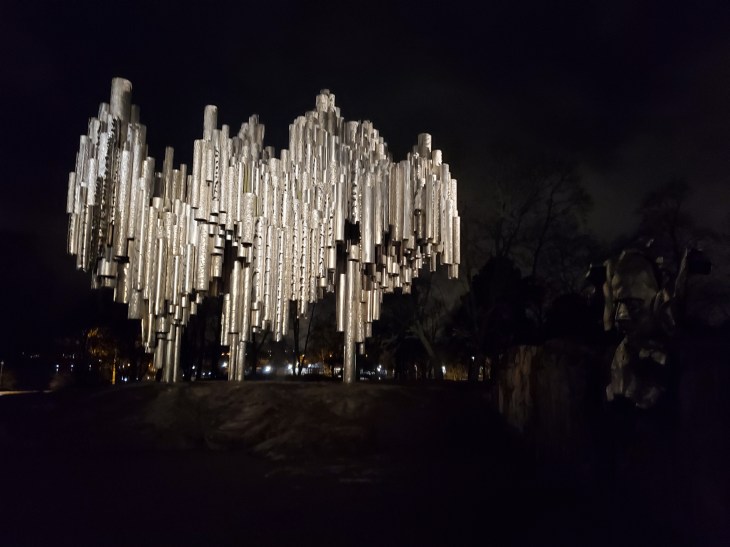
Tuesday, February 18:
I worked at the University of Helsinki faculty area today. Mostly, I read for several hours and took notes. There is no school in Helsinki schools this week; therefore, no schools could be visited. I planned to coordinate visits and establish more opportunities for future school visits in the next weeks.
Week 6:
Monday, February 17:
Today I met with Leenu Juurola at the University of Helsinki. I described my project interests with her, particularly the design process. She describe the Innokas Network to me. The Innokas Network develops innovative education methods that support the learning of 21st century skills. The Faculty of Educational Science at the University of Helsinki coordinate the Innokas Network and conducts research with regional coordinators, schools, and partners. Collaborative partners include Stanford University and various companies. The research methodology is based primarily on design research, and the researchers collaborate closely with teachers, students, and school partners to identify school challenges and address innovative solutions to meet those challenges.
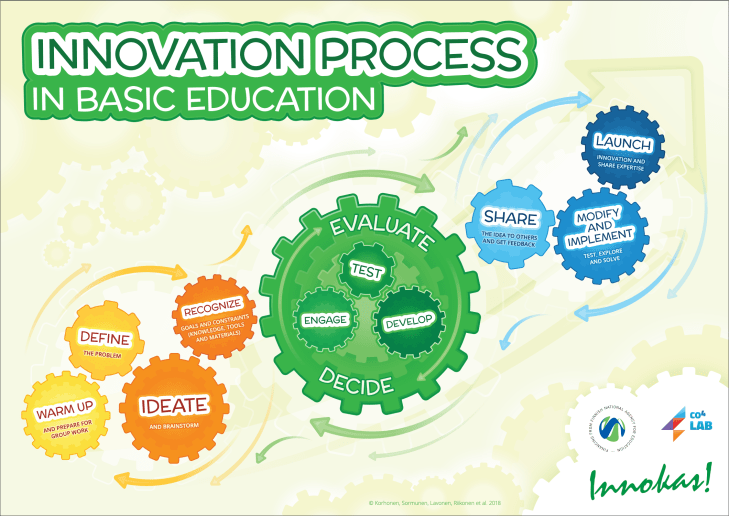
Leenu and I discussed the intricacies of creating an environment that is conducive to the design process, such as creating a trusting culture where students can freely communicate their ideas.
Sunday, February 16:
After breakfast I hiked across some bridges onto an island, through the forests. I walked along the perimeter of the island, taking in the vastness of the Saimaa Lake region, the largest lake in Europe. The national parks of Kolovesi and Linnansaari surround the area. I would love to come back and see the Saimaa ringed seal, a freshwater, endangered species that exists in the area. Hiking and kayaking through the area would be an amazing summer adventure. For today, I took in the sounds of the high-pitched birds high up in the trees, a woodpecker pecking at a tree, the wind blowing through the forests, and watched the ice fishermen.


Olavinlinna Castle was built, starting in 1475. Although the area was sparsely populated during its inception, the area was of military and geographic importance. Olavinlinna was first a borderline between Sweden and Russia, and Olavinlinna was needed to strengthen Sweden’s eastern border. Over the centuries the castle was controlled by both Sweden and Russia. Various periods of building can be seen in the castle walls and towers.
This weekend marked a celebration of ice carvings featuring Donald Duck. I could see sculptors at work. I was also able to tour the castle with an English speaking guide.


Saturday, February 15:
Today is my father-in-law’s birthday; Happy 91st Birthday, Tom. I rode the bus from Helsinki to Savonlinna, approximately 5 hours (208 miles or 335 kilometers). The bus fare was around €20 each way. Around 2 hours away from Helsinki, I could see snow on the ground, and it snowed the entire day. Only around a centimeter fell to the ground. With the wind and snow blowing, I opted to enjoy the spa facilities, including sauna, whirlpool and pool. Tomorrow I will explore the parks and see the Olavinlinna Castle.


Friday, February 14:
Today is Valentine’s Day and my mom’s birthday. Happy Birthday, Mom. I stopped at a store to have a gift shipped to the United States, so maybe she will receive it by Easter. Afterwards, I headed to Vanhankaupunginlahti, a birder’s dream in the middle of Helsinki. The fields of Viiki and the river Vantaanjoki form this unique nature haven. Hiking trails along the bay lead to a bridge allows easy access to Pornaistenniemi, where a path quickly splits in two. I took the right leading me on duckboards to Lammassaari and at the end of the nature trail was a watching tower. I admired all of the birders with the binoculars and cameras hoping to capture the varied species of birds. I was curious about the patterns on the ice and waddled carefully along the duckboards; I now have a new meaning to slippery. I am grateful I stayed dry today. Leaving the park, I admired the Vanhankaupunginkoski rapids and the dam.


Later this evening I Skyped with my first and third period students. Due to the weather, the students had a two-hour late start. I was the topic of discussion for their Headline News this week, and most of the students asked me questions. I was able to sing. Seeing Kelly was wonderful – her positive energy is contagious, and she is a delight to work with. Corry Spies, our principal, was also in the background with the students; it was great to see Corry’s smile. 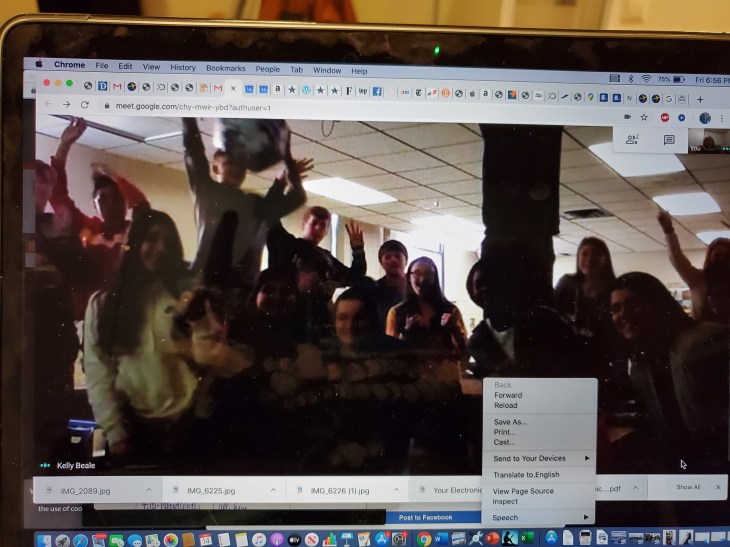
Thursday, February 13:
Today, I worked on planning and writing for a majority of the day. In the afternoon, the weather was beautiful so I walked to Seurasaari island. Seurasaari houses an open-air museum showcasing the traditional way of Finnish life. Cottages, farmsteads and manors from the past four centuries from all over Finland have been relocated on the island. There is a private beach (which is nude except for Wednesdays and Sundays), a restaurant, and regular events. One favorite event is the Midsummer bonfire which is lit by a newly wed couple just off the island’s coast. Thousands of people, tourists and natives, watch the burning of the bonfire from both Seurasaari or by a boat anchored nearby.


Wednesday, February 12:
There were no classes at the University today for the STEP students, but I sat with them as they were organizing their projects. I also met up with Leenu Juurola, a project designer. We will meet next Monday at 11 am and discuss the design process in Finnish schools.
I wanted to use the gym this evening, and learned that I must swipe my magnetic key over the key pad. The most difficulty that I had to day was figuring out entrances at the gym. People were eager to help, but I felt awkward when I could not exit out a door.
Tuesday, February 11:
At the international get together last week, I was asked by Päivi Portaankorva-Koivisto to present to her class of 230 students. The students were preservice teachers and the topic was collaboration and using the design process in my class. I am used to much smaller audiences, so it was difficult to gauge the level of enthusiasm. Päivi received positive feedback from some of her students and she was pleased with the presentation.
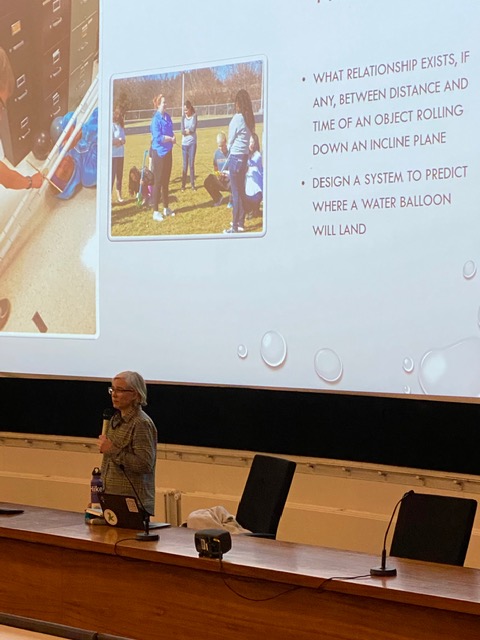
Leland and I were invited to my advisor, Antti’s home for dinner. I wanted to make an apple pie to bring. I also noticed too that my bananas were getting ripe, so I wrote the necessary ingredients to make an apple pie and banana bread and walked to the grocery store – just a block away. I had to pull out my phone and google translate the cloves, vanilla, and ask for assistance the flour (there are so many types to choose from). The grocery clerk was helpful and did not seem to mind all of my questions. Upon arriving back at the apartment, I converted all of the measurements from English to metric. I rolled out the crust, peeled and sliced the apples, and mixed in the spices, sugar and flour. I baked the pie in the oven and then began on the banana bread.
We met Antti at the train station and took the train to his neighborhood and then walked about a kilometer to his home. We were greeted by his children and his wife, Mira. She made sweet potatoes and an amazing sauce with salmon in addition to a salad. We ate the pie for desert along with some bread cheese topped with some jam. Mira invited us to attend her school although she needed to get permission from the individual teachers. All together, we experienced a wonderful evening.
Week 5:
Monday, February 10:
I was asked to be a part of the interview process for the Fulbright Mid-Career Development Grant. The focus of the grant is to provide experienced professionals the opportunity to conduct a professional development project in the United States at one or more organizations or institutions relevant to their project and then bring back impactful ideas to Finland. The grant length varies from 3 to 12 months. We identified positive qualities in the candidates and made recommendations for the selection process. I was honored to be a part of the process, and I enjoyed the day immensely.
Sunday, February 9:
Kristine prepared the bread for breakfast and I scrambled eggs for the children. They ate, played games or with Legos, and then wanted screen time. On the way to the train station I met Kristin’s grandmother; she lived nearby. Kristin waited with me at the train station, and I took a picture of us in front of the train station. She agreed that she would fly to Helsinki in May to visit.
Riding the trains were uneventful although I had only seven minutes to transfer trains in Leipzig, so I read the map of the train station to know where to go. In Berlin, I learned to get on the bus in the correct direction to the airport, and I may have annoyed the bus driver slightly. On the flight from Berlin, I met a person on the flight back to Helsinki. She and her husband had spent the weekend in Berlin. We exchanged numbers and agreed to meet for lunch.
Walking back to my apartment in the dark from the train station I enjoyed a full moon overlooking Töölönlahti Bay. Overall, I had a great weekend reuniting with friends.


Saturday, February 8:
Christoph Geisler stayed with our family in 2010. Christoph arrived to pick me up at 9:00am. There were big hugs for Christoph; when I last saw him, he was fifteen with beautiful, thick, long wavy hair. Now, ten years later, he has grown into a tall, lean man with short hair, but he still possessed the same beautiful smile – and he is studying to be a teacher. Christoph introduced me to his girlfriend, Sabrina, who was equally charming. We stopped at her home to deliver cakes that she had made for her coworkers.
We drove to a small community Mödlareuth, where a village was cut in half – one side Bavarian, the other Thuringian after World War II. Families and neighbors were separated, and lived under very different conditions. The Americans called the little village “Little Berlin”; it paralleled the division of Germany, like Berlin. Impenetrable border posts and even a wall separated the two parts of the village from one another until 1989, when a pedestrian crossing was created. In 1989, family relationships could be reinitiated.
On June 17th, 1990, the partial demolition of the wall began. To preserve the history of the division of Germany, original parts of the wall remained, along with metal fencing, observation towers, and even dog runs. The community built an open-air museum, making German history accessible.
At the museum we watched a video describing what it was like to live on either side of the wall – the disparity was very apparent. We walked around the village, and toured a building housing tanks, cars, motor scooters from both the East and West German sides. We walked along the border walls, and Christoph and I climbed into the observation tower.
Christoph told stories of his great grandmother moving from Prussia to the area. I am so thrilled that he is going to be a social studies teacher – he has an innate ability to tell stories, listen and explain well. After touring the small town we went to lunch at a traditional German restaurant, Glücksmüle, in Schleiz, Thuringia. Christoph and I reminisced about his stay. He confessed that he was scared of our two large dogs at the time, our large yellow lab and golden doodle. The dogs kept barking at him; I felt terribly guilty because I did not know he was frightened. He also told of his cold shower experience because he did not know how to use the shower nobs. I explained that I still have had cold showers in Botswana when I could not figure out the shower system either.
Christoph thanked me for his experience, and said that it changed him. He said that he came back more confident and sure of himself. The experience also positively shaped our family. Inviting someone new into your home, from a different culture, opens up doors; sometimes it feels raw, yet, authentic, and equally rewarding. Exchanges break down barriers and build bigger tables. I feel so blessed to visit Kristine, Christoph’s family, and Raik and Angela’s family.


Christoph and Sabrina dropped me off at Kristine’s apartment. We visited for only a few moments, squeezed in a few hugs, with reminders to visit each other, and I was passed off to spend the day with Raik, Angela, and their daughter Karolin. Karolin, who completed two exchanges in Muscatine, is an English teacher in Leipzig. We drove to Lauscha. Lauscha is known for its glass blowing. As a visitor you can participate in the glass blowing or watch artisans at work. Angela and I participated in the glass blowing. We looked around the shop, admiring the glass Christmas ornaments and all of the art work. I even purchased more marbles for grouping my students. (Each student selects a marble color to pick their collaborative groups – light blue and clear – team Aqua, and red and yellow – team Cyclones; already existing groups: black and yellow – team Bumblebee, dark hues of blue – team Pretty Blue, orange and clear – Team Goldfish; white, green and red – team Multi). I also bought slate coasters, to remember the Thuringian Highland.
Raik, Angela, Karolin and I enjoyed some ice cream and cakes at a coffee shop. I was eager to learn of Karolin’s experiences teaching in Leipzig. We discussed the region, world affairs, exchanged ideas, and enjoyed each other’s company. On our way back to Raik and Angela’s home, I admired the almost full moon cutting through the clouds as we drove through the forests in Thuringia. Our conversations continued at Raik and Angela’s home, where Angela made a delicious pasta dish. I also met Karolin’s boyfriend, Holger. We shared more stories, took group photos, and I expressed that we should not wait 15 years for our next reunion. Hugs were exchanged and I left for Kristin’s apartment.


Kristine was hosting her four nieces and nephews, ages five to eleven. They had just returned from the Carnival (Karneval), and some of the children still had confetti in their hair. A celebration of excess, Carnival is a chance to celebrate with parades, costumes, and balls. Items that are not normally consumed during Lent are consumed with glee. Often there is public mockery, with inside jokes and satire. The five year old’s eyes were looking heavy when I arrived, and the other children giggled for a while before they drifted to sleep. I learned a new phrase, “Schnabel zu,” meaning shut your beak amongst more giggling.
Friday, February 7:
Kristine and I walked to her school this morning. Classes began at 7:20 am, where she introduced me to her 8th grade English class students. I answered questions about myself, and then I gave them a presentation. We met for a little over an hour. Next we met with her 6th grade homeroom. The students rearranged the room to make a community table for breakfast consisting of bread, fruit spreads, Nutella, honey, and fruit. Upon completion of breakfast the students moved the tables and chairs back. Kristine and her assistant, Anke, then recognized the students by providing them their midterm grade reports. Grades 1 through 6 were given, where 1 is the best score. Many students combed through the comments and either took great pride in their scores, while some longed for better marks. The students then worked together to clean the classroom, removing books from shelves, dusting, or sweeping the floor. Afterwards we walked through Bad Lobenstein.
Bad Lobenstein is located in the highlands of Thuringia, between the Thuringian and Franconian Forests, southwest of the Saale River. Lobenstein was first mentioned as the seat of a night in 1250. During the thirteenth century the fortress belonged to the overlords of Gera. By 1600 the castle had decayed extensively. The castle played a small role in 1632 when the imperial troops stormed the fortress, occupied by Sweden, during the Thirty Years War. Only the remains of the keep and the fortification wall exist. In 1806, 190,000 men from Napolean’s troops marched through Lobenstein. Looting was common, and the population in the area suffered greatly.
A legend describes the naming of the town. “Lobe den Stein,” (Praise the stone) may come from emperor Ludwig the Bavarian (1328-1347) when he lost his favorite dog while deer hunting. One of his knights found the tired and injured dog lying on a stone. After carrying the dog back to his master, Ludwig gave the piece of land to the knight, resulting in the name Lobenstein. In 2005, the town of Lobenstein was renamed Bad Lobenstein due to the development of a spa.


In 2005, our family hosted Raik and his wife, Angela Röder, for two weeks. They were chaperones during the class exchange for their daughter Karolin. Raik met me at Kristin’s school. He greeted with me with yellow roses and a hug – a great reunion. We drove around the area and he took me to see Altvaterturm, a lookout tower, complete with museum rooms showcasing the area, and a memorial to the displacement of millions of people after the World War II. The tower is located on the highland Wetzstein in southeastern Thuringia. In 2004, the Altvaterturm was built on the summit as a replica of the tower that stood on the mountain Altvater, eastern Czech Republic until 1959. Thirty years ago the area was restricted to military use only. The lookout tower had a beautiful panoramic view of the Thuringia Slate Mountains, Franconian Forest, and Fichtel Mountains. The path to the tower is popular to both hikers and cyclists. Kristin met us at the tower, we walked back together, and enjoyed coffee and treats at a local bakery.


Raik drove me to the gardens at Saalburg-Ebersdorf. The gardens were large. I was amused by the fresh rooting from wild boars, which can be dangerous and problematic for the region. Raik and I traveled to his home, where I met Michael, his son. Michael had five rabbits, all endearing. Some of the rabbits greeted me, and he allowed me to partake in their feeding ritual where he cut up their carrots and gave fresh hay made in their own field. Angela made a dinner with meats, cheeses, vegetables, and breads and a salad. We talked through the evening. We shared pictures and good memories.
Thursday, February 6:
I left the apartment this morning at 4:30am and walked to the train station. The temperature was about 20 degrees Fahrenheit (-7 degrees Celsius) and snow was falling. Arriving at the train station, I purchased a train ticket to the Helsinki airport in Vaanta. The flight left at 7:30 am and I arrived in Berlin at around 8:30am.
As we were ready to land I looked out the window, and I noticed a halo of muted rainbow colors, mostly red, with the plane’s shadow – an optical phenomenon known as glory or anti-corona. Glories are actually commonly seen by air travel. The sun needs to directly behind your head, and you need clouds. As the observer looks toward the clouds, and sees the plane’s shadow a circle of rainbows will surround the shadow – the glory. The glory is made of sunlight scattered back toward the observer. The glory is made from light scattered from the droplets of the cloud. In order to see the glory, the clouds must be located below the observer, in a straight line with the sun and the eye of the observer. Although I was unable to capture the image, I wanted to share the phenomenon. Now my goal is to sit near the window during all flights in the daylight to capture the image myself.

Berlin has a one hour time difference from Helsinki. I took the TXL bus to the Berlin Hauptbahnhof (Central train station). In the summer of 2018, our German exchange students stayed at a hostel near the railway station, and the surroundings were recognizable immediately.
From the train station I took the train to Leipzig, where I met Christoph’s parents Jan and Katrin Geisler. Christoph had stayed with our family on a German exchange visit in the fall of 2010. The Geislers recognized me at the train station (Facebook keeps us connected even though we are separated by an ocean). We exchanged hugs, they took my bag to the car, and we begin touring Leipzig. The train station, the largest train station in the world, is often a tourist destination.
Leipzig is one of Europe’s and Germany’s fastest growing cities, with a population of around 600,000 people. The city is known for being a center for trade, culture and learning. Leipzig is also where East Germany’s Peaceful Revolution gained traction in the 1980s. I noticed a mural on the Marriott Hotel, a modern art mural memorializing the peaceful revolution in 1989.
St. Nicholas Church housed the Monday Demonstrations, peaceful protests, that eventually toppled the the GDR government. In 1989 tens of thousands of people gathered in the church plaza, giving way to the fall of the Berlin Wall. The church was beautiful inside, but no photographs were permitted on the interior.


We took the elevator to the top of the City-Hochhaus (City High Rise) to look out from the observation platform, where we could see amazing views of the entire city and beyond.


Next, we went to the Bach Museum, celebrating the life and work of Johann Sebastian Bach. In the treasure room, Bach’s hand-written music manuscripts were enclosed in glass cases. Because the documents were so delicate, they could only be shown for a few months at a time, and the display is rotated continually. Musical instruments from his orchestra were showcased. I especially admired the gut strings on the contrabass. Bach’s family tree was exhibited, including his family involved in music as court musicians, cantors, instrument makers or organists.


Across the street we went to St. Thomas Church, a 13th-century Gothic church where Johannes Sebastian Bach served as cantor between 1723 and 1750. A statue in his honor stands in front of the church. The St. Thomas choir is one of the most prestigious choirs in the world and can be heard on Fridays, Saturdays, and Sundays. Richard Wagner was baptized in St. Thomas, and in 1789 Mozart played the organ here. I marveled at an organ lesson in the church as we took in the sounds and views.


After the visit to St. Thomas Church, we ate pizza at an Italian restaurant. The food was delicious and the proportions were large. My day in Leipzig with the Geisler family was amazing. We drove to Bad Lobenstein, where the Geislers showed me their home. Katrin indicated that all the schools are located next toe each other located in Bad Lobenstein. We met Kristin Kuchenbecker and her adult English language learning class. Kristin worked with me at Muscatine High School from 2002 to 2010, and she taught German to my oldest son, Giles. Katrin was enrolled in the course as well. Kristin, taught two, back-to back sessions, and I shared my Fulbright opportunity with both sections, and answered questions.


Wednesday, February 5:
This morning I met with the last Social, Cultural and Philosophical Foundations of Education with instructor, Jari Saliminen. The class was asked to read and discuss Hannu Simola’s Firmly Bolted into the Air: Wishful Rationalism as a Discursive Basis for Educational Reform (1998). The purpose of the article was to provide a clear awareness of the challenges between public reform discourse and the actuality of instruction. The article presents a paradox of educational reform – seemingly conclusive, both schooling and reform discourse appear to lack merit. Reform after reform is often instituted without proper reflection. One question should be, “What is the school or the purpose of the school” When we only focus on what school should be rather than discussing what education currently is, problems arise. Quick results do not happen in schools – change results from gradual outcomes. I really enjoy Jari Saliminen’s thoughtful discussions in regard to the philosophy of education.
Class was finished this week for the STEP students. Sage Borgmästars, an American student and former International School teacher, and I met her host, Tracy for lunch. We discussed how to participate in the primary process as an American abroad. I found out that during Super Tuesday, there will be an election at Oodi Library in Helsinki. Sage and Tracy discussed raising their families here and discussed what they liked/or wanted to see improvements in their children’s education.
Eating too much Chinese food for lunch, I needed to go for a walk. Since there was no precipitation, the weather I took advantage of a perfect opportunity to explore Sibelius park some more and walk along the Seurasaarenselkä Bay. Along the way I discovered the dog park, Råholmen hundpark. The dog park is situated on small island with a forest with granite outcrops. Besides being greeted by dogs, I saw a person kayaking through the bay. On the way back I stopped at the infamous Cafe Regatta and enjoyed lemon cheesecake with raspberry topping along with a cup of coffee.


Tuesday, February 4:
Prior to meeting Antti, my advisor, for lunch, I was eager to see Johanna again. We set up times to visit Helsingin luonnontiedelukio (Helsinki School of Natural Sciences), where Panu Viitanen will institute problem based learning in physics. Antti and I enjoyed a lunch in the faculty area at the Minerva building. We discussed my project and Antti provided more ideas to collaborate with professors in technology education and problem based learning.
Today, the Vice Dean for International Affairs, Arto Kallioniemi hosted an international get together. Leland and I were asked to provide a short presentation about ourselves. Vice Dean Arto introduced projects and current issues in the international field. I presented my topic, “Unleash the Design Process.” I briefly introduced myself, showed a map of my town in the Midwest, various projects my students have completed, why the design process is important to me, discussed aspects of business and entrepreneurship development in my classroom, and briefly discussed my inquiry project in Finland. Humbled and delighted, Päivi Portaankorva-Koivisto asked me to present as a visitor for 230 subject teacher students (future language, science and mathematics, biology, geography, religion, psychology and adult education teachers) next week on February 10, at 10:15 am.


Week 4:
Monday, February 3:
On the way to campus, I stopped to get a gym membership through UniSport. There is a gym at our apartment complex and several more gyms near the University of Helsinki. Classes, such as spinning, yoga, dance, or strength conditioning, are no additional cost.
I attended the Support for Learning and Well-Being Course today. Immediately our discussion began with the premise that learning styles are not credible. Our instructor described universal design for learning (UDL) – a framework to optimize teaching and learning based on scientific research in how humans learn. The UDL provides flexibility in student engagement, student access to materials, and assessment. Students who learn or think differently particularly benefit from UDL. Different modalities can include a pause, repeating oneself, repeating key words, or providing key words. Short video clips might be ways to engage students or close captioning of video would offer varied modalities.
High Leverage Practices (HLPs) for special educators and teacher candidates were discussed. The HLPs are organized typically around collaboration, assessment, social/emotional/behavioral, and instruction. High-leverage practices are used across subject areas, grade levels and circumstances. Some examples may include leading a group discussion, explaining and modeling content or strategies, adjusting instruction during a lesson, or building respectful relationships with students. The advantage of HLPs is the ability to collaborate with other teachers in varied teaching areas.
Cognitive strategies and metacognitive strategies emphasizing self regulation were also emphasized. In the acronym STAR, steps can help a student
- Search the problem
- Translate the problem
- Answer the problem
- Review the solution
In fully implementing HLP, shortcuts cannot be taken, and levels of support must be included. Differentiating support should be the same for special education students as well as talented and gifted students. In addition extensions for every lesson should be provided to support higher levels of thinking.
Sunday, February 2: a palindrome day 02/02/2020
Leland, Bill (two other Fulbright recipients) and I met at the main lobby to travel to Tallinn, Estonia. We took the tram to the ferry for a two and half hour boat ride to Tallinn. As we approached the old city, we noticed the Broken Line Monument. The monument was erected to memorialize the lives lost on the Estonia ferry, which sank on September 28, 1994 between Tallinn and Stockholm. While 137 people survived, 852 died, and 757 people were never found.
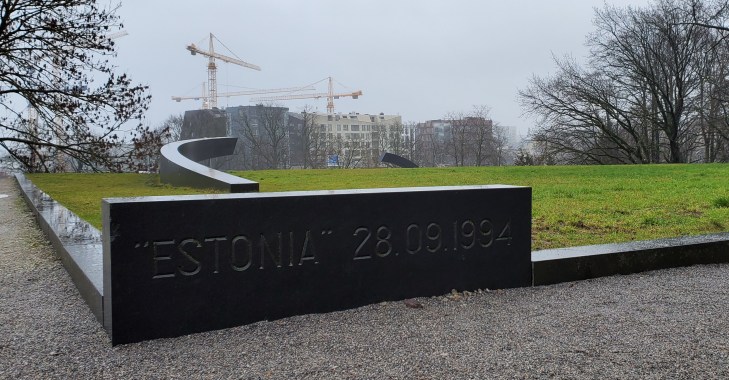
We entered through the city gates and visited St. Olaf’s Church (Estonian: Oleviste kirik). The church was built in the 12th century and dedicated to the King Olaf II of Norway, also known as St. Olaf (995-1030). The Gothic spire of the St. Olaf’s church was completed in the 16th century, then one of the tallest buildings in the world. The KGB used the spire as surveillance operations under Soviet domination. During the summer, visitors can climb the tower (232 steps) to a viewing platform near the top of the spire. The view is supposed to be spectacular, so I must come back.


For €2 we were able to climb up into Nun’s Tower, a wall section built in the 14th century that encircled the St. Michael’s Cistercian nunnery.


We walked by the Toompea area, including the parliament of Estonia and some other embassies. We also entered into the Alexander Nevsky Cathedral, an orthodox cathedral.


Near Toompea, we entered the Danish King’s Garden. A sculpture of three monks stood in the garden.


For only €8, we were able to tour the Kiek in de Kök, (“peep into the kitchen”) Fortification Museum, including the bastion passages. The fortification was built as a lookout for approaching enemies. We enjoyed a quaint cafe, including a snack and coffee. We were surrounded by armor – including a helmet that visitors could try on. We climbed various levels and were enamored by the views of the old city.


We explored the underground tunnels or bastion passages, built in the late 17th and early 18th centuries. As the city walls became more vulnerable to cannons, the walls grew wider and lower to disperse the energy from cannon artillery. The primary purpose of the passages wee to shelter troops and provide storage space. The walls of the passages are made of limestone. Not all of the passages are connected continuously and over 470m has been renovated. By the mid 1800s the Bastions were no longer used as military sites, and the passages were abandoned. Occasionally the passages were explored with the result of various stories and legends.
In the 1930s, air raid and anti-gas shelters were built. Ventilation systems were added. Fortunately, no gas weapons were ever used in Tallinn. In the 1950s, under Soviet control, stone slabs were installed to the floors, More ventilation, electricity, phone lines, and pipelines for running water were installed. Accommodations were made for people during a nuclear war. The fall out shelter was abandoned in the 1970s. After the collapse of the Soviet Union, some Estonians struggled with their country’s independence, and from 1991 to 2004, several homeless set up camp in the tunnels. In 2004, the city of Tallinn began to renovate the tunnels and make them accessible for public viewing. Most surprising, was the skulls carved into the limestone walls.


Leaving the tunnels, the rain had stopped we could see the moon reflections in the puddles, and the light reflected off various towers throughout Tallinn as the sun began to set.


Saturday, February 1:
Today was a me day. I read all day and thought about walking to Seurasaari, an island that houses many old, wooden buildings transplanted from elsewhere in Finland. The rain kept splattering on my window, and the comfort of my apartment was too difficult to overcome. I enrolled in a meteorology course from Montana State to brush up on my meteorology – it has been almost 25 years since my last meteorology course. So today, I read chapter one and started chapter two of the text. I learned some chords on my ukelele, and l tried brushing the strings with my fingers, not just my thumb.
Friday, January 31st:
Although there were no classes at the University today for the STEP program, I was able to obtain a library card from the University of Helsinki (the University Library is beautiful – I am excited to go back just to check out the architecture), obtain my key to the faculty lounge and eat lunch with some STEP students. Their shared reflections are honest and beautiful in their roles as parents, students, and teachers. As we build connections, I look forward to meeting with them next week.
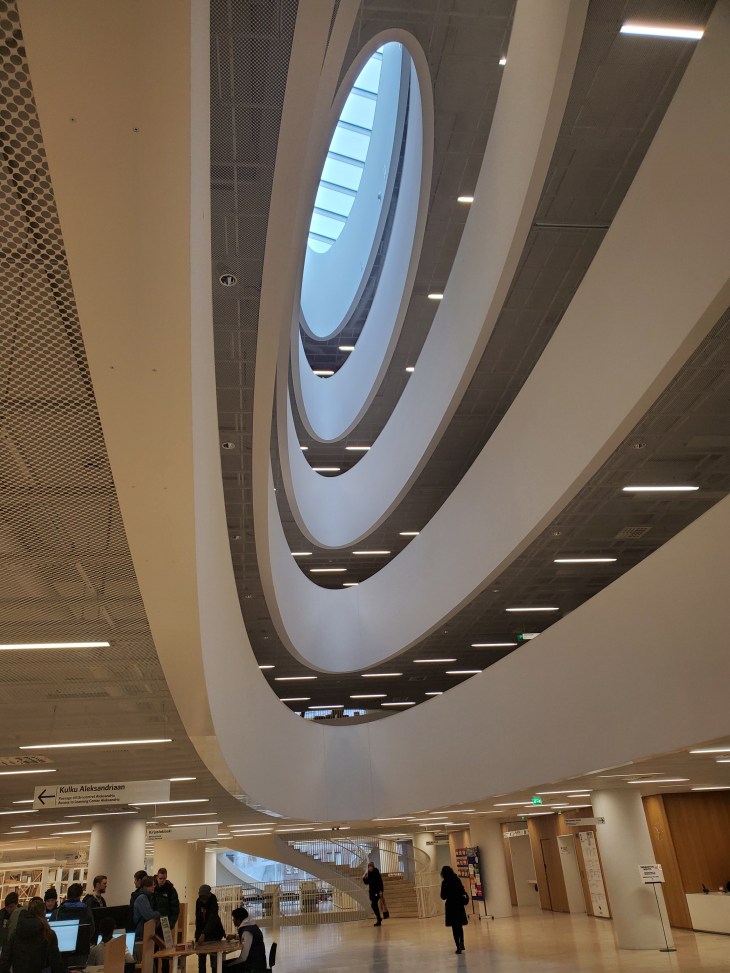
Thursday, January 30th:
In the Social, Cultural and Philosophical Foundations course this morning and afternoon, we began with the following questions:
- What makes a pupil/student a member of a minority group?
- What is included in the diversity of a pupil/student?
- What is culture?
I was asked specifically about what I thought culture was and I reflected on a similar question that we were asked this summer: “What is your culture?” I responded that I thought culture is a product of your environment; mine was shaped by an agrarian background, family, faith community, friends, experiences, travel, and yet it was not static, but evolving.
Often when we think of culture we focus on the differences, rather than the similarities and often times we ignore diversity between each individual in a group. Culture can be blamed for failures or credited for successes. Culture can even be used as an alibi for not taking responsibility of an action. Social justice or equity can even be ignored as a result of a “respect” of a certain culture.
Some implications in teaching could be on a map, what is the focal point? Whose history do we teach? Who is depicted doing a skill? Are individuals from various minority groups included in a story, novel, historical lesson?
In one discussion, “What does it mean to respect?” “Is it an empty word?” “What is respect?” In our thought provoking discussion, we all came to the conclusion that every human has value.
The courses with the international students provide a unique structure – students come from varied backgrounds and experiences as they try to assimilate into the Finnish education system. Many have taught all over the world, or are parents of children in Finnish Schools. I definitely see that with these students, despite our varied backgrounds and uniqueness, we are so similar in many ways. I love seeing the teacher students in these courses, conversing with them, eating lunches, and sharing stories. Each day at the University of Helsinki is a treat with the STEP students.
On my walk home, I strayed to the the Ticketmaster office and bought a ticket for Green Day May 27 concert in Helsinki. This is for Giles – one of his favorite groups. I am prepared to hear more f-bombs in one evening than I probably have in a lifetime (which says a lot), but I am looking forward to this event. The last concert that I attended was a Billy Joel concert in Ames, Iowa in 1987. I imagine the two events will be very unlike each other.
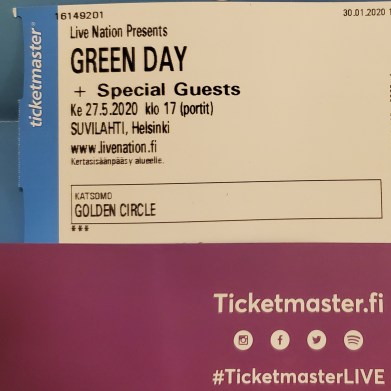
After arriving at my apartment, I was able to contact my friend Kristin Kuchenbecker, a former German teacher at our high school. She had set up an exchange with two families in Bad Lobenstein, Thuringia, Germany in the 2000s. I am so excited to fly into Berlin on Thursday and meet Jan and Katrin Geisler in Leipzig. Their son, Christoph stayed with us for two weeks in 2010. Exchanges build connections and shape who we are, and I am grateful. In addition, I will be able to visit Kristin’s school and speak to her students on Friday, February 7.
Wednesday, January 29th:
I left early this morning for the Digital and Population Data Services Agency. I knew that this process could take several hours. The facility opens at 9 am. When I arrived, there was line outside the door. At 9:00 we were allowed to walk up the spiral staircase, take a number and begin waiting. At least the chairs were comfortable. There were people from all over the world. I have a greater empathy for the immigration process all over the world, and this was comparably easy compared to many places.
I had not been to this part of Helsinki so I need to reorient myself and find a tram. I was so happy to take one to the Hakaniemi Market. Currently the market is under renovation. Inside fresh fish, eggs, bread, pastries, cheeses, and vegetables were sold. Vendors were selling soups and sandwiches, and I ate the most amazing salmon soup. Souvenirs, handcrafts, and interior decorations were also sold at the market.


I then walked to the University to join one of the classes. Today was the first day that I had made this session in the Support for Learning and Well-Being Course. The outcomes for the course include:
- have basic knowledge of the most common learning difficulties in a daycare and school context
- have basic knowledge how to recognize learning difficulties and how to support learning in a daycare and school context
- be able to function target-oriented and constructively in interactive situations related to learning difficulties with learners, colleagues, experts, and learners’ parents/guardians
Some interesting topics included the use of a hassle sheet. When an individual student is struggling, the teacher can suggest the student complete a “hassle sheet.” The student would identify what is the problem or what happened; who was involved; and what was the effect or consequence. Then the teacher and student could coordinate a plan for future self-regulation.
Another method for monitoring behavior, using contingency self assessment was discussed. Students could self-monitor their behaviors using records of occurrences of the behavior and record the number of times; use of Likert scale to compare criteria for the behavior; or make a list for self reinforcement.
Cognitive interventions were suggested, including a way to teach social skills using the acronym: START
- S: stop
- T: tell myself to calm down
- A: ask myself the consequence of my action
- R: relax
- T: tell myself to solve the problem or deal with it
I walked back to my apartment after class in the mist/rain. It only takes about 40 minutes, but I love walking past the train station, Oodi (the library) and around Lake Toloviken.
Tuesday, January 28th:
After meeting for breakfast in the hotel/spa, we walked to the ferry for a two hour cruise back to Helsinki. We stopped in a mall outside of the port. The prices for clothes were much cheaper than in Helsinki, and in some cases, cheaper than the United States.
On the trip back, we shared pictures of families and houses. The teachers gave me great ideas of parks to see in the area where I live, including more places to hike.
Arriving back in Helsinki, I took the tram to the train station where I went to the main HSL office to attempt to purchase a monthly transportation pass. The Helsinki Regional Transport Authority, Helsingin seudun liikenne (HSL), is the inter-municipal authority that maintains the public transportation of the Helsinki area. Currently, I was paying €32 per week for public transit. By purchasing a monthly pass, I could reduce the cost by more than half.
After queuing and grabbing a number I realized that I must get a personal identity code from the Digital and Population Data Services Agency. The clerk assured me that upon receiving a letter of request for the identity code, then I could receive a monthly pass. Therefore, I purchased another weekly transit pass, and walked back to my apartment.
Week 3:
Monday, January 27th:
This morning I took the tram to the Länsiterminaali and met up with the teachers from the Helsinki Normal Lyceum and Science Education Professors from the University of Helsinki to ride the Tallink ferry to Tallinn, Estonia. The ferry ride took only two hours, and the cost of the ferry to and from Tallinn plus the hotel/spa for one night was only €89.


Once we checked in to the hotel, the group met in the conference room. An update was given in regard to the the upgrade of the National curriculum and teacher education programs. Individual breakout sessions in physics, chemistry, biology, mathematics, and geography (earth science) then discussed specifically the changes that would be implemented.
One of the graphics that was emphasized by Dr. Jari Lavonen, the Head of the Department and Professor of Physics and Chemistry Education at the Department of Teacher Education, University of Helsinki, Finland. He tied three themes together: widespread persuasion, new creative expertise, and continuous development of one’s knowledge and community.
Widespread persuasion included knowledge of one’s field, pedagogical proficiency in substance science, research skills, different students, and social and ethical issues. New creative expertise included curriculum skills, the ability to innovate together and develop new innovations, and the ability to reflect, evaluate, and change one’s own actions. Continuous development of one’s own knowledge and community included the ability to apply your own expertise and develop school skills in networks, and joint knowledge of community development.
Other topics of discussion included how to integrate the UN 2030 sustainability goals within the curriculum. Another factor that was discerning was that only 17% of 16 year-olds imagined themselves in a STEM-related career at the age of 30. Yet, many of these students scored well on PISA exams. Questions were raised as how to encourage young people to go into the sciences or even science teaching.
After the meetings, we divided up. Some continued to meet at the hotel, some enjoyed the spa, and some us walked around the old city of Tallinn. I took in the sights, and decided that this would definitely be worth coming back for another visit. We ate at a restaurant called the Peppersack, dating back to the year 1370. On occasions there can be actors performing sword fights in the restaurant.


Sunday, January 26th:
Bill Helling, a Fulbright-Haaga-Helia Scholar in informatics, Leland and I toured the Design Museum Arabia, part of the Iitala and Arabia Design Center at Arabianranta in Helsinki. The ceramics of Arabia and glassworks of Iitala were featured in the collections. The museum provided an exhibition of the history of ceramic and glass design in Finland.


Leland and I took the bus to Heureka, where imagination is a human’s superpower and play is the highest form of research. Immediately I was drawn to the dinosaur exhibit. Giant robot dinosaurs were featured in natural habitats. Replicas of dinosaur skeletons were on display in addition to real dinosaur fossils.


I was able to immortalize my face on a coin. In the coin exhibition we learned about the production of money and the ability to measure the authenticity of a coin.
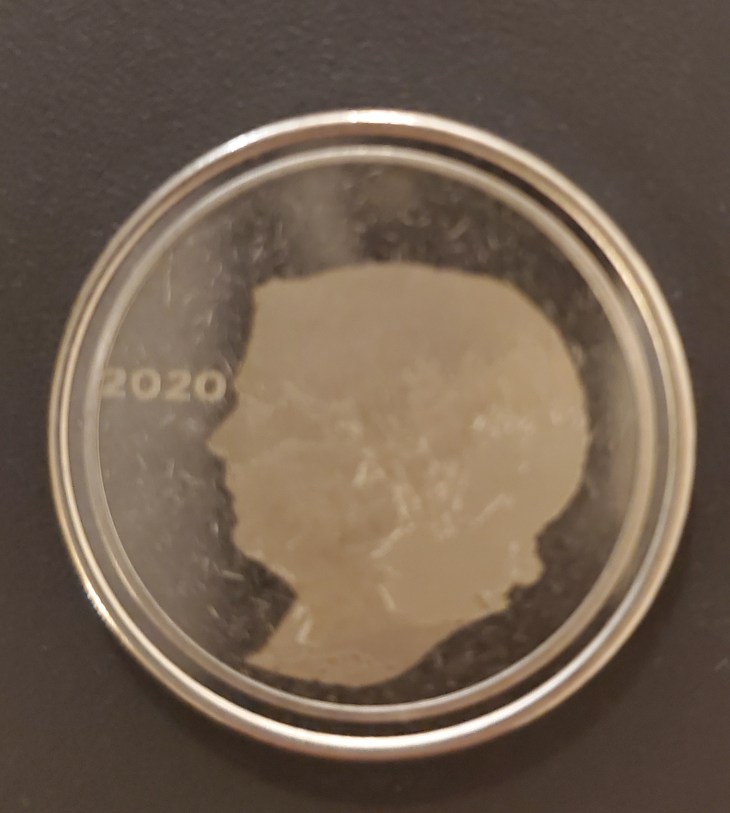
In the main exhibition hall I was able to ride a tightrope bicycle.
In a global display, four video projectors project animated images of the Earth’s surface, oceans, atmosphere and astronomy onto a large sphere. The Science on a Sphere exhibit was designed by the United States National Oceanic and Atmospheric Administration (NOAA). In other exhibits, you could play with a sailboat and use wind patterns to change the direction of the sails. Parents and children designed objects that could fly or cars that could race down tracks quickly with devices to measure the velocity.


As an experiment, you could test whether two circular objects would roll down a ramp quicker. The difference was the location of the center of mass. I enjoyed the toilet paper description of the usefulness in understanding rotational motion. Many public restrooms have large toilet paper rolls. Due to the moment of inertia, the rolls spin slower as the paper is being pulled off of the roll. The moment of inertia signifies the inertia of an object as it rotates or its ability to resist and change in rotational speed. When toilet paper is pulled too quickly, it will tear too soon. In order to retrieve the desired amount of paper, the roll should be pulled off the big roll slowly. The paper can then be torn with a rapid pull with one hand.
Outside a 24 meter tower emitted sparks using more than 200 media tubes and lights.
Leaving the science museum we could observe several examples in Finland’s bedrock. One hundred twenty-four specimens were on display.
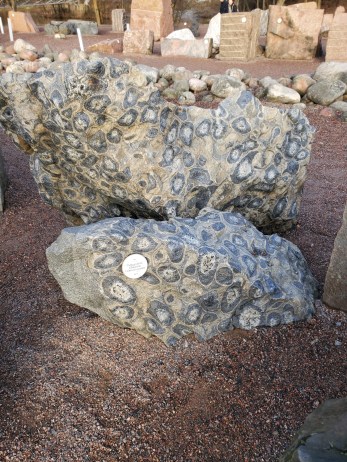
Since the weather was still nice when I arrived home, I wanted to check out the walking path around Töölönlahti Bay. As the sun was setting, I was able to capture the reflections on the water – a very enjoyable early evening and great day overall!


Saturday, January 25th:
This morning I attended the Educa 2020 program presenting innovations in Finnish education. The program presented the Finnish education system and innovations in teaching. The conference, organized in cooperation with the Trade Union of Education in Finland (OAG), the Finnish National Agency for Education (EDUFI), and the Finnish Ministry of Education and Culture, provided opportunities to understand the Finnish teaching and education sector.
There were many vendors and programs offering insight to educational professionals. I loved the different types of school furniture offered for schools – well constructed and made in Finland with collaboration in mind to meet the needs of students. Of particular interest was the UN booth for sustainability education and other international booths such as Red Cross and UNICEF.


After stopping at the the F Musiikki booth, I decided to walk downtown to the music store and purchase a ukelele, a gig bag and music. I learned to tune it right away and play a few songs including Frere Jacques, Mary Had a Little Lamb, Go Tell Aunt Rhody, Ode to Joy, and Twinkle, Twinkle Little Star.
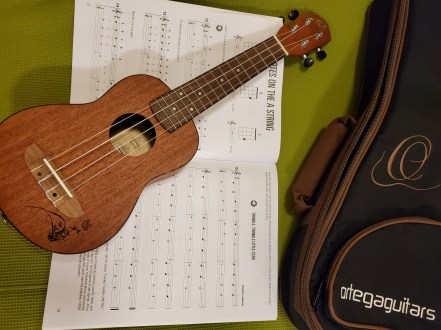
Friday, January 24th:
This morning we departed for EMMA, Espoo Museum of Modern Art (Espoon moderin taiteen museo), the largest museum in Finland. The permanent exhibition presents a selection from the Saastamoinen Foundation Art Collection and other domestic and international exhibits. Family members of the Saastamoinen Foundation welcomed us, included a guided tour, provided lunch, and gave us a gift from the museum.


When I first entered the gallery, I was mesmerized by an acrylic aquarium – half filled with distilled water and transparent silicon oil, Restless Horizon. Being less dense, the silicon oil floats on the water with a visible border between the two fluids. An electric actuator slowly tilts the aquarium back and forth, creating wave movements and thought provoking ideas.
One of my favorite exhibits was the Sky of Time, by Tatsuo Miyajima, a meditative display of hundreds of LED counters fixed to the ceiling. The numbers, one through nine, continually change at varying random rates. Three underpinning Buddhist concepts were expressed in Miyajima’s work: “keep changing”, “connect with everything”, and “continue forever”.


A featured exhibition Michael Jackson: On the Wall, brought together leading contemporary artists’ interpretations of Michael Jackson. The artists showcase the impact and influence of Michael Jackson’s life and art on our culture and ideas.
Our next tour introduced us to the Sibelius Upper Secondary School in Helsinki, where were greeted by administration and a performance by the students. Many Finnish professional musicians attended the school. The school provides general education, music and dance instruction, and opportunities for networks, contacts and various performance opportunities. The Sibelius Upper Secondary School is one of ten upper secondary schools in Finland that specialize in music. Students can choose from chamber music to jazz, music theory, music technology, composition, musical arrangement, musical productions, and ensemble playing. The school has a symphony orchestra and several choirs.
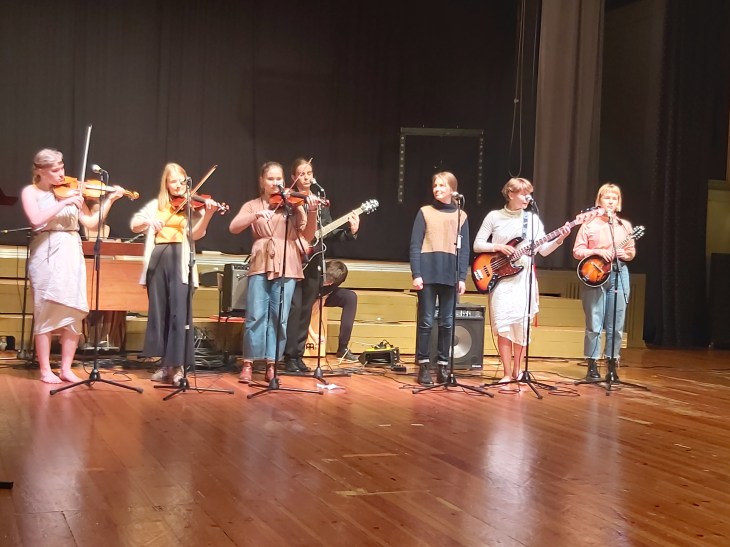
After the performance, Birger Holm, Vice Principal, Haukilahti Upper Secondary School presented 10,000 years of Finnish history in thirty minutes.

Heidi Toivonen, Fulbright Language and Culture Teaching Assistant 2007-2008, gave us a lesson in Suomi 101. Heidi guided us through simple phrases, and numbers and compounding words. We learned the longest word, but I don’t think I will use it often:
technical warrant officer trainee specialized in aircraft jet engines = lentokonesuihkuturbiinimoottoriapumekaanikkoaliupseerioppilas.
We were presented with a Finland Fulbright certificate and the book The Kalevala, a great 19th-century epic, welcoming us into Finnish heritage. The work played a key role in Finnish independence and inspired the music of Sibelius. The Kalevala is regarded as one of the most significant works in Finnish literature.
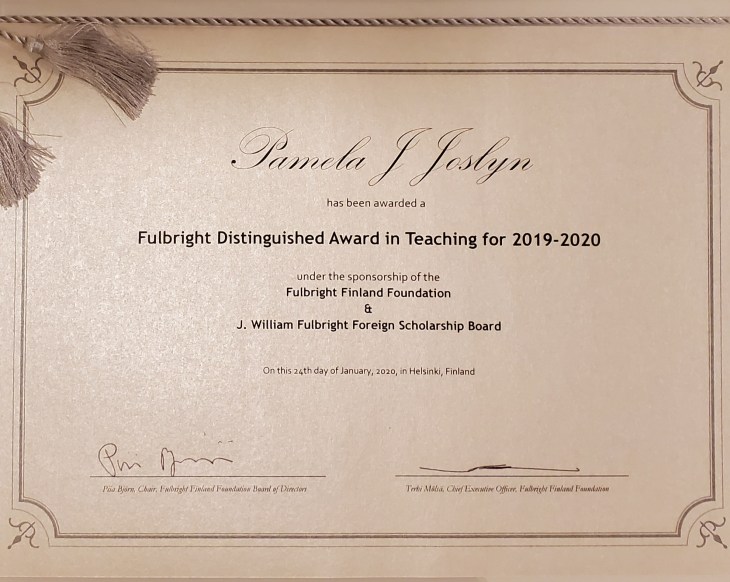
On my way home I walked by the library Oodi and stopped to observe the celebration of the Chinese New Year, falling on the first new moon of the year, and the year of the rat. I was moved by the video streaming from China, the dancing and all of the people gathering to welcome the Chinese New Year.


Thursday, January 23rd:
“No niin…” (Let’s…) can be a start of a conversation or a reaction to something – having multiple meanings. Other important words and phrases: Hyvää huomenta (good morning), Mita kuuluu? (How are you?), Hyvää (good), Ei (no), Kyllä (yes), Suklaa (chocolate) – and Fazer (a brand of chocolate pronounced fawtzer) were presented this morning.
We learned that language is more than syntax and vocabulary. For, example, there is not he or she in Finnish – no pronoun for gender. The pronoun hän refers to a person. Encouraged by the words of William Fulbright, “The essence of intercultural education is the acquisition of empathy–the ability to see the world as others see it, and to allow for the possibility that others may see something we have failed to see, or may see it more accurately” (From The Price of Empire). We are challenged to see the world from the point of view of a small nation, rooted in over 10,000 years of history associated with harsh living environment.
Jeremy Wisemiller, from the U.S. Consulate, spoke of registering, passport replacement, emergency numbers, traveling to other countries, and other citizen services.
The Finnish System of Education (K-12) was introduced at the national, municipal, and school level by the following individuals in a panel discussion: Kristina Kaihari, Counsellor of Education, Finnish National Agency for Education; Pia Hakkari, Educational Coordinator, City of Vantaa; and Maija Heikkilä, Teacher of English, Helsinki University Teacher Training School in Viikki, Fulbright Distinguished Awards in Teaching 2016-2017. The mantra, “There are no dead ends in the education system,” were explained at every level of education from age 0 – 18 with an ethos of utilizing soft skills to prepare children for life.
In the afternoon we participated in a panel discussion of the Finnish System of Higher Education and Research, covering the differences between Universities and Universities of Applied Sciences (UAS) and the Finnish system of higher education and research. Timo Korkeamäki, Dean, Aalto University School of Business, member of the Fulbright Finland Foundation Board of Directors; and Teemu Kokko, President, Haaga-Helia University of Applied Sciences were the Internationalization in Finnish Higher Education and Research Panelists.
Leasa Weimer, Assistant Director of Strategic Partnerships & Initiatives, Fulbright Finland Foundation, presented “Adventures in Intercultural Communication and Culture Shock.” Topics included small talk, pause in discussion, volume of conversation, personal space, queue in the supermarket, meeting other individuals in a narrow pathway, touch, greetings, a smile, and compliments, follow the rules, but don’t correct others, e-mail communication and grit. Culture shock, the loss of the familiar, and ways to compensate culture shock were discussed.
After the morning and afternoon sessions, we departed on a city tour of Helsinki. One of our first stops while touring Helsinki was the Sibelius Monument, Sibelius-monumentti, located in Sibelius Park, Sibeliuspuisto. The monument, created by Finnish artist Eila Hiltunen, was the result of a competition to recognize the composer Sibelius. The sculpture consists of 600 hollow steel pipes welded together in a wave-like pattern.


One of my favorite treasures in Helsinki is the library, Oodi. At Oodi you can borrow books, read magazines, enjoy lunch, hang out, see a movie, hold meetings, organize events, create music, sew, play with children, or use laser cutters or printers. One notable artwork is the staircase in the library, a piece dedicated to the visitors of the library by Otto Karvonen. The piece is a reminder that the library belongs to everyone, regardless of age, origin, wealth or any factor. A panel of words are randomly painted on the staircase represent any one: (here are a sample in English)
the forgotten
the cheerful
the young
holiday-makers
minorities
ordinary people
loudmouths
freeloaders
the rightless
alcoholics
workers
the hounded
the trusting
weirdos
adopted people
small people
wizards
opportunists


On our way to the U.S. Embassy we saw the most spectacular sunset over the Baltic Sea. We were treated with an Fulbright alumni get-together at the U.S. Embassy and welcomed by Ambassador Robert Frank Pence us at the gathering. We were able to meet other Fulbright Alumni throughout the evening and develop connections with other guests.


Wednesday, January 22nd:
This afternoon we met at the Fulbright Finland Foundation Office. We picked up our orientation materials, met the other grantees and enjoyed coffee and a pulla, a Finnish sweet bun. Immediately we learned more Finnish words such as “sisu”: perseverance or the ability to excel in the northern latitudes.
The theme of the orientation was Together Shaping the Future. Together: we all have responsibilities to solve problems together. Shaping: proactively making a difference through creativity, education, and knowledge. Future: everything ultimately has a positive impact for everyone and future generations.
We were told Prime Minister’s Sanna Marin’s New Year’s message (December 31, 2019): “Finland’s strength lies in its people and their knowledge. We have survived because of our desire and ability to learn. We have risen from modest beginnings to become one of the most highly educated and skilled nations in the world. This was the secret of our success yesterday; this will remain the key to our success tomorrow. That is why we must have the courage to keep investing in people and knowledge. We must dare to create something new. In a rapidly changing world, simply reworking old recipes is not good enough.”
The Fulbright Finland’s vision is to empower the minds that will find global solutions to tomorrow’s challenges by fostering academic and professional expertise, and excellence in leadership.
After the orientation sessions we traveled by bus to Villa Hvittorp in Kirkkonummi. The teachers formed breakout session to discuss Finnish schools. After the breakout we went to the sauna and some us took a dip in the lake. We were taught sauna etiquette. The evening was incredibly relaxing and enjoyable.


Tuesday, January 21st:
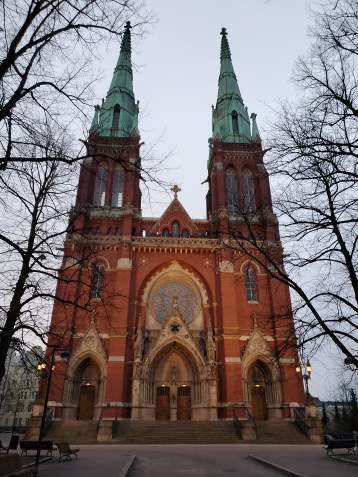
This morning I met Johanna at the near Johanneksenkirkko, the largest Lutheran stone church in Helsinki. The inside is supposed to be spectacular, and I hope to visit there some weekday afternoon. After greeting Johanna, we walked to the Helsinki observatory. I recognized where we were, the top of the hill along the sea walk (from the day I wanted to see the full moon).
At the observatory, we met the students from the Helsinki Normal Lyceum, enrolled in the history of science class. A museum host discussed Ptolemy, Copernicus, Galileo, Hans Lippershey (credited with the earliest workings towards the design of the refracting telescope), Brahe and Newton. The students were shown videos of retrograde motion. A tour of the facility was given, including early refracting telescopes, timing devices, and an early Finnish wooden almanac. We watched the night sky in a small planetarium. I included a picture of the original bag that was used as a timing device. Five minutes before noon the bag was lifted to the top of the observatory roof and then dropped at twelve noon exactly. The signal was observable from Helsinki Central railway station and was used to set the station clock.


The Helsinki Observatory was built between 1831 and 1834. After a large fire in Turku, the University was relocated to Helsinki. The building had an unobstructed view of the sky and was visible to the port.
As new observation technology was developed, designing a building became difficult. A refracting telescope required a supporting structure in the form of a revolving tower with a rotating opening for observations. As the city grew and lights and smoke hindered astronomical observations, observation activities were moved out of Helsinki, including international observation sites in the Canary Islands and Chile in addition to observation satellites.
Week 2:
Monday, January 20th:
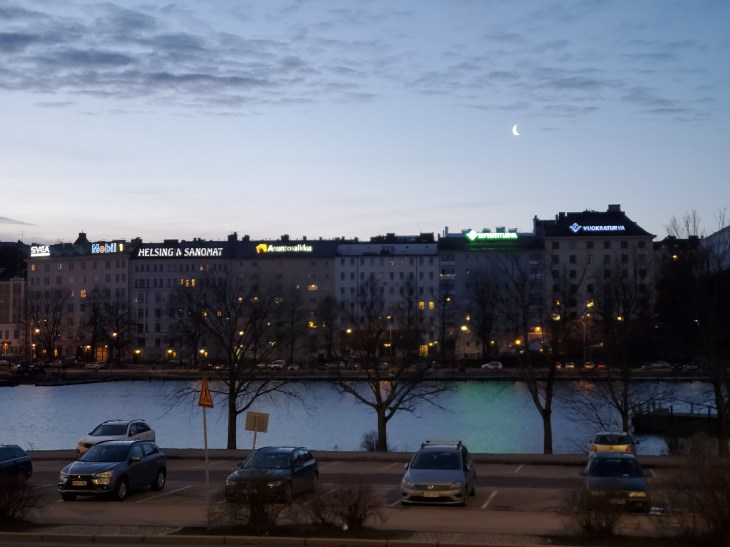
Walking into the building for this morning’s conference, I enjoyed the view of the Gulf of Finland. I was invited to attend the US – Finnish Partnerships for International Research and Education (PIRE), “Learning Science Answering the Challenges for the Future of Science Education.” The opening remarks were given by the Program Manager from the Academy of Finland and the Vice Rector from the University of Helsinki.
Joseph Krajcik, a Lappan-Phillips Professor of Science Education, presented via a video salutation from the College of Education and the Department of Sociology, Michigan State University. Barbara Schneider, a Hannah Distinguished Professor, from the College of Education and the Department of Sociology, Michigan State University, spoke about results from problem-based learning. Dr. Schneider shared data that indicated project-based learning, when implemented in physics and chemistry, increased student learning. The effects could be found across racial and ethnic differences, gender and region.
Dr. Jari Lavonen, Professor of Physics and Chemistry Education, Department of Teacher Education, University of Helsinki, shared data, indicating an increase in student engagement using problem-based learning. He also discussed social-emotional indicators using hand-held technology.
Stéphan Vincent-Lancrin, Deputy Head of Division and Senior Analyst OECD Directorate for Education and Skills. Centre for Educational Research and Innovation (CERI), presented “Learning Science and Creativity and Critical Thinking.” He gave eight criteria for good lessons. 1) Create students’ need/interest to learn; 2) Be challenging; 3) Develop clear technical knowledge in one domain or more; 4) Include the development of a “product;” 5) Have students co-design part of the product/solution or product; 6) Deal with problems that can be looked at with different perspectives; 7) Leave room for the unexpected; and 8) Include space and time for students to reflect and give/receive feedback.
Lunch was provided, and time was permitted for networking viewing of educational posters.
Elsbeth Stern, Professor of Empirical Learning and Instruction Research and Head of the Institute of Behavioral Sciences, Department of Humanities, Social and Political Sciences, ETH Zurich presented “Aha Moments.” Elementary teachers had added physics education to early grades, sometimes as early as 1st grade. The students retained the information and performed better on pretests in later grades.
Mei Hung-Chiu, Professor of Science Education, Graduate Institute of Science Education, National Taiwan Normal University presented “Cognitive Dissonance Moments in Science.” Using facial recognition, her research team used facial patterns to determine student understanding. When students look surprised, followed up by a negative sequence of emotions, then often the students showed understanding. Implications for the study include providing enough time for students to process difficult concepts and many times teachers look for only positive emotions from students. No emotion can also be a sign of understanding.
Leena Pöntynen, Director, Education, Technology Industries of Finland, presented “Girls and Women in Technology.” Although girls may perform as well as boys in science education, girls may not be entering the fields in science education. Educators can help encourage females to enter scientific fields.
In the final session Kalle Juuti, Associate Professor of Digital Learning at Schools, Department of Education, University of Helsinki, led a panel discussion with teachers and students. The audience used our cell phones to submit questions for the panel. The students gave interesting responses to using problem based learning. Many of my own students in the past have had the same responses in completing projects or using modeling curriculum.
The sessions were incredibly informative. Afterwards, nibbles were offered and I was introduced to several teachers, and I set up opportunities for more school visits.
Sunday, January 19th:
Today I wanted to walk through Central Park, and I was at peace in the woods. There is a definite joy in hiking amongst the towering trees. As I entered the southern point I was greeted with a faint rainbow. I loved all of the outcrops of granite, wanting to balance on them. The ferns would not rest for winter and lingered on throughout the woods. The moss carpeted the stumps of trees and decomposing logs. There were trails for equestrians to ride and stable their horses. Amused by a chair in front of sticks stacked like a teepee, I tried to imagine some individual tranquilly sitting here in the woods. Mountain bikers riding over single track paths and granite were beaconing me to purchase a bike. The soft earth under my feet on the trail let me bounce with every step. The garden plots, with canals, varied from plot to plot- what great joys to dig in the Earth. Ready to leave the park I saw black woodpecker, about the size of crow digging out of the lower tree trunk.


I wanted to test my ability to transfer between buses and the tram and go to IKEA this afternoon. It took about an hour to arrive there, and another hour back. Today was a great day: over 32,000 steps, 22 km, and 106 flights of steps!
Saturday, January 18th:
Finding a new mode of transportation today, Leland and I took the bus to Porvoo, Finland.Porvoo is the second oldest town in Finland and is known for its historic Old Town and colorful riverside warehouses. Porvoo is only an hour by bus from Helsinki and easy to explore by walking.


We walked through the historic town, visited shops, and enjoyed a coffee and traditional bakery. I enjoyed a pulla, filled with cream and an almond paste. The red colored buildings along the river are a proposed UNESCO World Heritage Site.


Parvoo Cathedral is located in the center of Old Town. An Evangelical Lutheran church built in the 15th century with parts dating back to the 13th century, Parvoo Cathedral is constructed of stone and bricks.


Friday, January 17th:
Today, at the University, the students gave presentations in the “Curriculum and Development of Educational Institution.” Topics included various aspects of assessment: diagnostic, formative, and assessment, digital tools, self-evaluation, and feedback. Reflecting about assessment created stimulating conversations within the class today.
I also attended the cultural portion of another course. We were asked to identify our culture – as a student, tourist, family role (parent of, child of, sibling of, etc.). Today’s exercise reminded me of a question asked earlier this summer at our Fulbright training in Washington D.C., “What is your culture?” The instructor showed a video clip of one of the most popular well-known TED Talk, “The Danger of a Single Story.” Adiche provides a fresh cultural perspective that continues to motivate listeners today.
“The single story creates stereotypes, and the problem with stereotypes is not that they are untrue, but that they are incomplete. They make one story become the only story.” -Chimamanda Ngozi Adichie
Thursday, January 16th:
Petteri, my Finland Fulbright buddy, invited Leland and me to attend his school’s production of Annie today. Leland and I took the train to the community of Vantaa via the train from the train station.


Upon arriving we walked about 2 kilometers and maybe extra. We saw a building being demolished, a children’s school and we were able to walk along an amazing walking path and even through the woods to arrive at the community theater, Cultural House Martinus.


Today’s performance was geared for area middle level students who may want to attend Vaskivuoiri Upper Secondary School, the school performing the production of Annie. Students have prepared for the last six months for their performances. The students are trained by professionals, and perform one to two performances each day for over a week. The cost of the production exceeds €100,000. The performance was absolutely amazing and a real treat!


The Vaskivuori Upper Secondary School, has three different curricula, a general curriculum, a music curriculum, and a dance curriculum. Approximately 1,000 students attend the school, 120 study in the music and dance curriculum.
Within the music curriculum, students may participate in chamber choir, a girls choir, the high-quality music theater productions. The music school has a modern recording studio, available to the students. Some music courses include music knowledge and history, big band, choirs, rock music, ear training, chamber music, individual instrument music tutoring, classical solo-singing, recording techniques and computer-aided music.
Each year seven students are selected into the dance curriculum. The dance curriculum is taught in cooperation with Vantaa Dance Academy and other dance institutes.
Students studying advanced math can take up to 17 courses of mathematics, ranging from statistics to space geometry. The physics courses range from computer-aided lab courses to courses preparing students for higher levels within the educational system. Measurement sensors attached to graphing calculators are standard within the physics labs.
The school also has a sports center, a public swimming pool, a football hall, and an indoor ice-hockey area. Physical education courses include ball games, swimming, hiking, aerobics and downhill skiing.
Students may study English, German, French and Swedish as a first foreign language. Other languages offered include Spanish and Russian. Short courses in Chinese, Japanese, Latin and Italian are also offered.
Wednesday, January, 15th:
This morning I attended the “Curriculum and Development of Educational Institution” course -the same as Monday’s course. The students were collaborating to prepare presentations on various forms of assessments. After the class, Johanna, the instructor and I ate lunch and then we sat in on a science education class. The class was taught in Finnish, so I relied on Google translator heavily today. An American sat to my left and explained some of the discussion too. The Finnish schools require self-reflection from the students, faculty and administration. As a more effective means of measurement, the instructor encouraged a rubric rather than a Likert scale. I am really enjoying the aspect of meeting students from all over the world and gaining an evolving view of education.
Tuesday, January 14th:
Transferring trams for the first time, I arrived at the Helsinki Normal Lyceum, commonly known as Norssi, one of two teacher training schools that operate under the Faculty of Educational Sciences of the University of Helsinki. The school is comprised of grade 1 & 7–9 and a general upper secondary school. Approximately 400 students attend Norssi. Norssi is one of few Finnish schools that offer Latin studies from 7th grade on; the school’s Latin motto – “Non scholae sed vitae”, meaning that we do not learn for school, but for life.
Observing a history of science course (85 minute lecture) for the upper secondary students. Sir Isaac Newton, was the topic of discussion. Interestingly, Newton’s idiosyncrasies were included, such as his research in alchemy and his religious ideas. Other scientific influences were included, such as Voltaire and Voltaire’s lover, Émilie du Châtelet – most famous for Institutions du physique and the translation of Newton’s Principia, which was published after her death along with a “Preface historique” by Voltaire. I loved the infusion of art, history, and physics.
Today I sat through a three and a half hour lecture for Social, Cultural and Philosophical Foundations of Education. The instructor, Jari Saliminen, was enlightening, authentic and engaging as he began to share his 30 years of educational experience. Over 1000 students each year have the pleasure of studying under him. He acknowledged that most of us were there because the Finnish school system is so wonderful, especially the PISA scores. PISA is an international assessment that measures 15-year-olds’ ability to use their reading, mathematics and science knowledge and skills to meet real-life challenges. The international students were from Norway, China, Chile, South Korea, Japan, France, Bulgaria, Netherlands, Finland, United States, Greece, Pakistan, Spain, Turkey, and Mexico. Dr. Saliminen provided glimpses into historical perspectives of education and its impact, and he reminded us that “changing a school is like moving a graveyard.” He offered readings by Larry Cuban and David Tyack: Tinkering Towards Utopia: A Century of Public School Reform. Other factors that involve innovation usually last only 2-3 years, and after five years the innovations are often no longer there. Within 15 to 20 years, the cycle may repeat.
We covered what makes a great teacher, “A teacher is like a football trainer, he must believe in his team.” There must be a balance: demand and love, or motivation and critiques. I appreciated his analogy of multimedia and multitasking in the classroom. He compared the ability of people using a cell phone while driving a car – one second can make a large difference.
Week 1:
Monday, January 13th:
This morning I attended a course at the University of Helsinki, “Curriculum and Development of Educational Institution” in the STEP (Subject Teacher Education Program) program. The STEP program develops teachers’ pedagogical studies in English at the Department of Teacher Education. The goal of the STEP Project is to design and pilot a teacher education curriculum in English for subject teachers. Students enrolled in the class were from the United States, Mexico, Turkey, Pakistan, Korea, Bulgaria, Finland, and France. In introducing ourselves, we briefly discussed assessments. In addition, we discussed what kind of feedback did we receive as students and how we felt when we received feedback from assessments? The class drew a concept map indicating various forms of assessment, what is assessed, who is assessed, when does assessment occur, how are assessments performed, and challenges in assessment. On Friday the class will give a presentation on either diagnostics assessment, formative assessments, summative assessments, feed back, peer assessment, tests and exams, and digital tools for assessments.
During lunch I was able to try Pinaattiletut and Pinaattiohukaiset, unleavened spinach crepes eaten with lingonberry jam. Although they are usually eaten during breakfast, they were a fantastic lunch.
After class the instructor, Johanna Jauhianen, I visited the Viiki Teacher Training School, one of the University of Helsinki’s teacher training schools. The school was established in 1869 in Finland as Finland’s first Finnish-language school for girls.
Meeting with the preservice teachers, the Johanna listened to each group and in their lesson planning. Here she is demonstrating possibilities to introduce friction, using different materials on a block along smooth surfaces and a rough surface. One group was designing a project where students would make shoes for a shoe factory. The preservice teachers seemed concerned about student interest, and I asked them what if the shoes were designed for a skateboard?


Arriving home before 4 pm, there was a little daylight left, and I ventured off towards Central Park. I was able to make it to the Southern edge of the park. Central Park covers a thousand hectares, where the trails run ten kilometers from Töölönlahti Bay in the center to Haltiala on the northern outskirts of the city. The park is actually a forest where I saw joggers, walkers, and cyclists. People visit to mountain bike, pick mushrooms and berries, roller ski, and ride horses too. There are even allotted gardens, an archery range, and if we get snow, ski tracks. Despite all of the humans, foxes, hawks, owls, brown and white hares, badgers, woodpeckers and other Northern boreal friends live in Helsinki’s Central Park.


Sunday, January 12th:
This morning I found the laundry in the other building in the basement. Laundry is included in our rent, but you must sign up for a time and provide your own detergent. There was availability this morning so I washed a load.
Recycling and waste reduction is important here; all refuse is divided – a container for bio waste, paper waste, and mixed waste.
Today, Leland and I visited the Museum of Contemporary Art. Because I purchased museum pass, I can go to all museums in Finland for the remainder of my trip using the museum pass. A couple of my favorite exhibits were in the Coexistence section. The theme of this section was, “How can we ensure our coexistence with nature is done sustainably?”


My favorite exhibit “The Visitors” by Ragnar Kjartansson, featuring the artist and his friends singing and playing in an old American mansion – the old Rokeby estate near New York. Each performer was filmed in a different room – the library, study, music room, bedroom, bathroom – simultaneously but separately. The performers could hear each other via headsets. During the one-hour exhibition, the sounds and images were merged to hear/see all nine musicians performing as an orchestra. Ragna Kjartansson performed in one of the videos playing guitar in the bathtub (even the splashing was a medium used as a sound effect). Making music with close friends was the key aspect of Kjartansson’s project. At the end, the musicians step out of each room and out of the mansion and walk out onto the lawn together with the mansion’s real residents.
The music was named after ABBA’s last album and the lyrics are based on the poem by Ásdis Sif Gunnarsdóttir.
Feminine Ways
A pink rose
In the glittering frost
A diamond heart
And the orange red fire
Once again I fall into
My feminine ways
You protect the world from me
As if I’m the only one who’s cruel
You’ve taken me
To the bitter end
Once again I fall into
My feminine ways
There are stars exploding
And there is nothing you can do


I enjoyed a room where you can create your own art and post the art on the wall with a magnet.
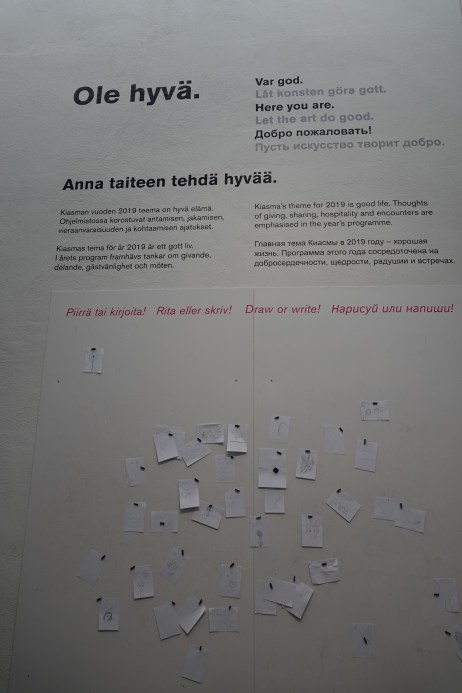
Leland and I also went to the Amos Rex museum, featuring 20th-century Finnish art with a substantial collection from Birger Carlstedt. Afterwards we checked out some local shopping. I was amused to see children drawing with their fingers on a digital blackboard.
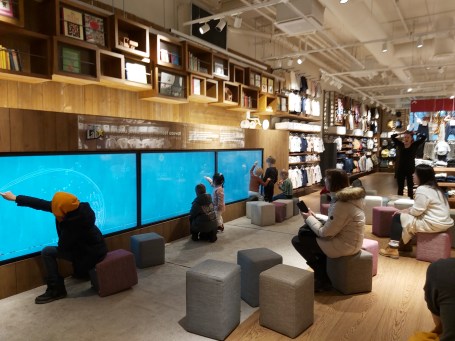
Saturday, January 11th:
Today Leland and I visited Suomenlinna, a World Heritage Site. We took the tram to the Kruununhaka district and walked over to the ferry. Our tram pass allowed us to catch the ferry to the island. Suomenlinna is located on the islands off the coast of Helsinki. The fortress began construction when Finland was still part of Sweden. The fortress still houses over 800 residents. Suomenlinna was added to the UNESCO list of World Heritage sites in 1991 as an example of military architecture. Hosting an irregular shape and unique history, Suomenlinna served as a defense for Sweden, Russia, Finland.


Friday, January 10th:
This morning Leland and I toured the Finnish Museum of Natural History. The Museum is a research institute under the University of Helsinki. The scientific collections include more than 13 million animal, plant, fungal, rock and fossil specimens, reflecting the evolution of life on Earth.

Later in the afternoon, I wanted to see the first full moon of 2020. I took the tram down to the Kruununhaka district, and I walked about 2 kilometers along the sea wall.
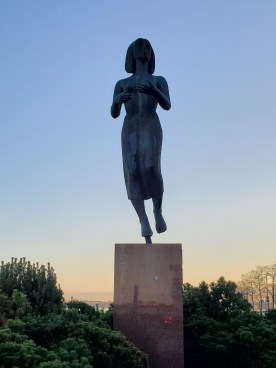
Along the way I saw the Statue of Peace, marking the 20th anniversary of the Agreement of Friendship, Cooperation and Mutual Assistance between Finland and the Soviet Union in 1968. This statue of peace was erected by the people of Finland as a symbol of the peaceful coexistence and friendship of Finland and the Soviet Union. The artist, Essi Renvall, explained that the statue’s feminine figure is the spirit of peace returning after the war with a new, peaceful heart.
I was so excited to capture the full moon rising over Helsinki.
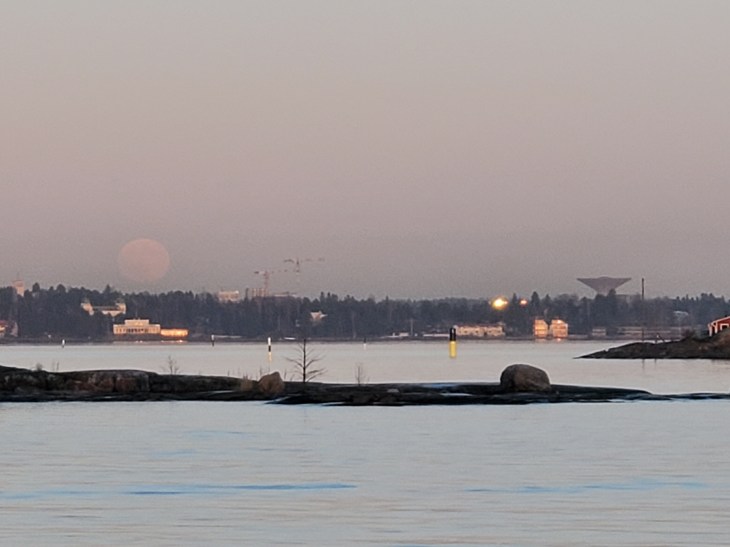
After capturing the moon, I met my Fulbright Buddy, Pettari Granat, at the Cafe Ekberg. We enjoyed great conversation, coffee, and traditional Finnish desert. I was excited to learn about the museum pass. I can purchase a year-long pass to visit 280 museums in Finland. He made sure I took the correct tram back to my apartment.
Thursday, January 9th:
I met my advisor at the University today. Antti and I discussed opportunities for taking courses next week, beginning Monday. We also planned options for schools to visit.
After visiting with Antti, I walked down to Senate Square. I entered the Helsinki Cathedral. The Cathedral, completed in 1852 by Carl Ludvig Engel, is one of the most popular tourist sights and is a landmark for those entering by sea. Earlier, the cathedral was named the St. Nicholas Church and Great Cathedral. The statue of Alexander II is in front of the cathedral. Alexander II (1818-81) was the tsar of the Russian Empire from 1855 to 1881. Finland became a grand duchy within the Russian Empire in 1808 and became independent from Russia in 1917.
After struggling with my internet in Helsinki today, I opted to purchase another phone with a European plan. Since I am not a Finnish resident (two years) I can purchase prepaid plans via a card. Life is now simpler with internet access everywhere.
Wednesday, January 8th:
Breakfast is served daily at my apartment beginning at 7 am. I met Leland for breakfast, and we planned the day. An amazing selection of breads, meats, vegetables, multi-grained hot cereal, eggs (scrambled or hard-boiled), yogurt, dry cereal, granola, juices, milks, and a variety of fruit were available to try.


Leland and I purchased a one week pass for public transportation, including tram, bus, and the Metro. We ventured to downtown Helsinki, taking the tram to the Central Railway Station metro station (Finnish:Rautatientorin metroasema).

From there we took the Metro to the University of Helsinki metro station (Finnish: Helsingin yliopiston metroasema). As we walked out of the station Leland and I were amused by the paintings on the walls. There are many tunnels in Helsinki that lead to metro stations, parking lots, connecting shopping centers, and some even connect islands to the mainland.
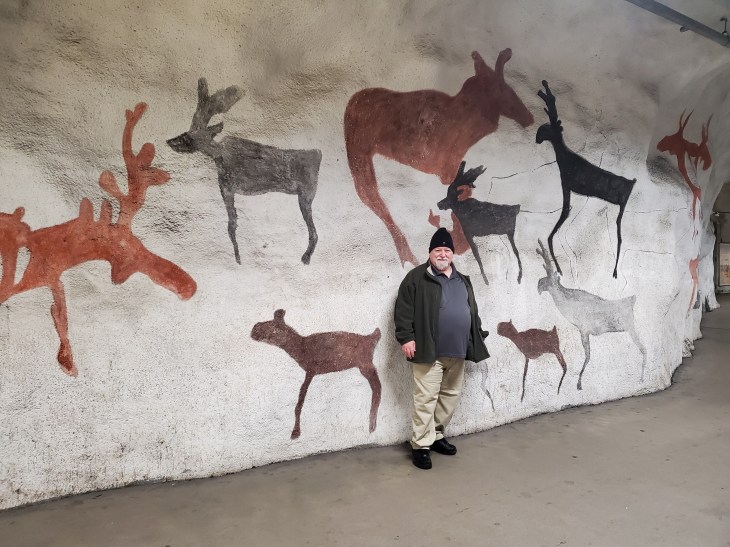
The University of Helsinki is located in the central district of Kruununhaka. We walked toward the seaside. Along the way we saw the Helsinki Cathedral and many other impressive buildings. We walked into Old Market Hall along the seaside. Inside the market we found a number of shops that specialized in local Finnish favorites, such as reindeer meat, jams and jellies, sauces, smoked sea food, plus much more.


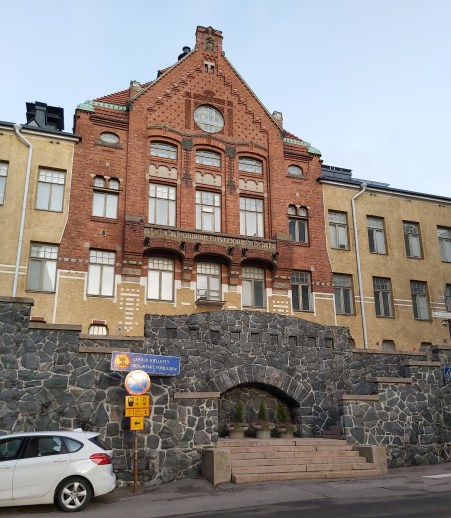
At noon we met my advisor, Antti Laherto, for lunch. We ate at the cafeteria housed in Minerva Hall at the University of Helsinki. We learned about Finnish history, enjoyed each other’s company, and we were given a tour of the building. After meeting with Antti, we met with Laura Karilainen, who also welcomed us to the University of Helsinki.
Traveling to Finland: January 6 – 7th
Leaving Moline, the flight attendant, Michael, embraced his career with great enthusiasm. Hand gestures, a sense of humor, smiles, naming each person on the flight by name were just some simple reminders of how we can help make others feel more welcome. Michael’s thoughtful, positive mannerisms subtly kick-started my adventure.
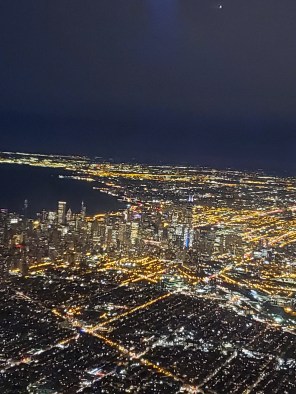
Travels to Chicago, and on to Heathrow Airport in London were uneventful. At Heathrow, I met Leland Leslie, another Fulbright Distinguished Teacher Award, from Tulsa, Oklahoma. This is Leland’s third Fulbright experience – he has toured Japan twice, and now Helsinki. He will be studying the connections between Finnish phenomenon based learning, student art experiences, teacher training in virtual arts, and transversal skills in relationship to visual literacy. Incredibly knowledgeable in art education, I look forward to learning from Leland.
For the first time in my life, I was greeted at the airport with a sign for “Pamela Joslyn” and “Leland Leslie.” Leland’s Fulbright buddy, Elina Kaverma-Soukko, met us at the airport in Helsinki with beautifully printed hand-made sighs. Elina stated that she had always wanted to greet someone at the airport with signs. Elina picked us up from the airport and drove us to our residence.
After unpacking I took a couple of pictures of both the stairway and my apartment. I am located on the 12th floor. Although I took the elevator for my luggage, my goal is to take the steps each time, up and down. My apartment is quaint, and I feel very fortunate. Tomorrow, I will meet my advisor, Antti Laherto at the University of Helsinki.


Information about Finland
My Fulbright Buddy, Petteri Granat, sent me wonderful information about Finland this fall.
Language: Approximately ninety percent of Finnish people speak Finnish as their first language, five percent speak Swedish, and the remainder other languages. One can easily get by with English. Helsinki and the surrounding area is composed of people from all over the world. On the streets, trams, busses, Metro, you may hear English, Russian, Somalian, and other languages on a daily basis.
Finnish is a difficult language to learn. Here are some phrases to get started:
Hello: moi
Please: pyydän
Thank you: kiitos
Have a nice day: Hyvää päivänjatkoa
Transport:
Helsinki area: Public transportation is great and no car is needed to get around. There are busses, trams, trains, and a metroline to choose from. Purchasing a pass in advance will save money. Taxi rates can vary, so agree on a price with the driver. Über is also available.
If you rent a car, gasoline is expensive. One liter, about 1/4 of a gallon is about €1.50 or around $6/gallon. Most cars are also manual transmission.
Intercity travel: Finland is a small country. Most intercity travel is by car, trains or busses rather than flying. Due to competition, bus travel is very affordable. For example, travel to Tampere, Turku, Jyväskylä, or Lahti is only a couple of Euros each way. Tickets must be purchased prior to travels. For further travel to Lapland, Oulu or Ravaniemi, a flight may be preferable.
Groceries: There are two major chains: S-stores and K-stores; they control eighty percent of the market. The low cost German Lidl can also be found. Alepa or Valintatalo are smaller stores with higher prices. The Stockmann department store has a large food selection on the underground level as well.
The selection will not be as great as an American grocery store. There may only be 5-7 types of cereal. Everything that is needed can be found, but expect different tastes such as bread. Breads are often rye or more dense than soft wheat bread. Dairy selection is usually large.
Laskiaispulla and Runebergin tortuu, are seasonal pastries in January and February – highly recommended. Sweet buns, or “pulla”, candy or chocolate are all wonderful in Finland.
An area called Hakaniemi provides ethnic food store options, mostly Asian but also North-African/Middle Eastern.
Taxes are always included in the price tag.
Restaurants: Helsinki has a great restaurant scene. The current trend, focusing on food, is more casual and quality restaurants. Most people eat out on Friday or Saturday evening. There are many places to have lunch with a relatively low cost (10-12€) in downtown Helsinki. Dinner is usually eaten from 7-9 pm, and the kitchens close around 10:30-11 pm.
Finns usually have dinner between 7-9pm, kitchens usually close 10.30-11pm.
Drugstores: The sale of pharmaceuticals is regulated by the government and cannot be found in a grocery store. The “Apteeki” is usually open until 5 or 6 pm, but some are open until midnight or 24/7.
Tipping: Tips are not expected. People are paid decent wages and do not depend on tipping. In a restaurant, people may round up a bill. For example, if the total is77€, they might pay 80€.
Sports: Ice hockey is a favorite. There are two big clubs in Helsinki: HIFK (national league) and Jokerit (KHL). Tickets are easily available and prices start at15€. The playoff season for the KHL begins in late February and the national league in early March. Fans get very excited, especially if the national team is successful. There is also a basketball team called the Seagulls in Helsinki – tickets are easily available for 15-20€.
Music, opera etc.: There is a national opera and ballet in Helsinki. There are also plenty of smaller venues for various music genres.
Art & history museums: The following web site lists the ten best museums to visit in Helsinki:
https://theculturetrip.com/europe/finland/articles/10-best-museums-to-visit-in-helsinki/
Finland Fulbright 2020

Acknowledgements
I would like to express a sincere appreciation to Dr. Jerry Riibe, Superintendent of Schools, and the Muscatine Community School District for allowing me to participate in the Fulbright Distinguished Award in Teaching in Finland. I would like to thank my principal, Corry Spies, for his support and facilitation of a smooth transition from the fall semester to arriving in Finland. Likewise, I would like to thank all my coworkers for their continued support and encouragement. Possessing an endless enthusiasm and attention to best teaching practices, Kelly Beale has been my rock during the fall of 2019, and I will miss our STEM Innovator Fridays and “Headline News.” I would like to thank the support of the Fulbright Association in both the United States and Finland and IREX for all of their assistance and professional development. Finally, I would like to I would like to thank my family and friends for their continued support. Especially, I would like to thank my brother, Mike Harper – my go-to person. Finally, I would like to thank my husband, Jim Joslyn, for his patience, love, and encouragement.

 Be Curious!
Nice..
Sent from my iPhone
>
LikeLike
Moi, Pam!
LikeLike