Monday, August 13
Today is my last day in Africa. For breakfast I met with Helen and Dennis. Our friends, Erellah, John, and Issa, from Intrepid, said our “See you later.” They would start their tour all the way to Rwanda. No one wanted to say goodbye, and we all hoped that we would see one another again. After breakfast, we left for the market and Bo-Kapp area.
The Bo-Kapp area was a small parcel of land leased to slaves at the foot of Signal Hill. The original aboriginal tribes in the Cape Town area resisted the Dutch, and slaves were imported from Malaysia, Indonesia, and other parts of Africa. Many of the new residents were Muslim and several mosques were built in the area. After emancipation in 1834, numerous row houses. The brightly colored facades are attributed to an expression of freedom by the homeowners because all the houses were painted white while leased.
With the support of the Historical Monuments Commission, the preservation of the area began in 1943 when fifteen houses were restored. In 1966, a portion of the area was designated as a National Monument. By 1975 over 48 houses and streetscapes were restored.


After enjoying taking pictures and walking through the housing area, we continued to walk to the wharf. There we enjoyed the food market, the ships and the area. I really enjoyed seeing the four sculptures in Nobel Square. The lives of Albert Lutheuli, Desmond Tutu, F.W. De Klerk and Nelson Mandela were depicted as sculpures standing in a row, each with a meditative expression on their faces. Each of these globally celebrated South African had won the Nobel Peace Prize. In addition, the laureates favorite quotes were engraved at the feet of sculptures in various languages.
It only makes sense that the 4 sculptures in Nobel Square, a popular Cape Town tourist attraction, are slightly larger than life. The lives of the men portrayed were of epic proportions. Depicting Albert Luthuli, Desmond Tutu, F.W. De Klerk and Nelson Mandela, the sculptures stand in a row, feet together, with a meditative expression on their faces. Globally celebrated as great South Africans, these 4 men past and present, are tied by a shared, outstanding achievement: winning the Nobel Peace Prize for their hard-won battle for democracy and freedom in South Africa.


We waited in line to catch the ferry to Robben Island. I loved the sign that said, “Watch your head” as we entered the ferry. We had learned that the morning tour was almost canceled due to the high water swells and weather conditions. The delay of the morning tour caused a later start. I captured a few photos from the back of the ferry of the Capetown. Upon arriving we were funneled into a bus tour, where we saw where the leper colony had been buried. We saw the limestone quarry, where the political prisoners were forced to work in vain. None of the mined limestone could be used for any purpose due to the lack of quality. We learned how prisoners were able to converse and form what is now South Africa as a result of the secret conversations between prisoners coming together. A prisoner shared his perspective of his imprisonement. Although Nelson Mandela was the most well known prisoner, the stories of other prisoners were shared. The collective thoughts of all the prisoners shaped the ideas that helped a new South Africa.


Walking back to our hostel, Once in Capetown, we avoided begging on the street on the way back for the next 45 minutes. At 8 pm, the hotel utilized Uber to acquire a cab to the airport for half the cost. The driver’s name was Tommy, a refuge from Rwanda. We had a delightful conversation for the 45 minute drive. Although he asked for $150 Rand, I gave him $200, which was the equivalent of $15. Tommy in turn assisted me with carrying my bags to the KLM line. We said farewell and wished each other well. He emulated the warmth from the people I met in Southern Africa.
Sunday, August 12
Today, I did not plan anything other than walking to the wharf. The waterfront is one of Africa’s most visited cultural and historical hubs. Table Mountain can be seen in the background. We could walk around and see a musical group performing, face painting, children playing, or shopping. The mall appeared very American-like. I particularly enjoyed the boats and food markets. Up to 100,000 people visit the waterfront daily during peak season.


Saturday, August 11
This morning we met downstairs for breakfast and prepared for a day trip to the Cape of Good Hope. We stopped at Hout Bay to take a 40 minute tour to see the seals.
We drove up along Chapman’s peak along the western side of Hout Bay. The peak was named after John Chapman, an English pilot who sent his skipper on shore to locate provisions in 1607. The road is a major engineering feat, carving a near vertical face onto the mountain. The top of the mountain consists of flat sedimentary rocks similar to Table Mountain, while the base of the mountain is composed of Cape Granite. The two formations meet at a geological unconfor
There we took a group photo. stopped at Boulders Beach to see the penguins. The tour company pulled out some “Raleigh” bikes to ride. Although they supposedly fixed my breaks I knew that I would be able to slow due to the bad bearings, loose crankshaft, and rusted cables. I understand why they suggested that we not use the small ring and shift only the gears off the back wheel. Despite the challenge of the bike itself, I really enjoyed watching an ostrich cross the road directly in front of me. After the ride, we enjoyed a picnic lunch. Then we walked up to the light house at Cape Point and walked to the Cape of Good Hope, the Southwestern most point of Africa.
Sunday, July 29
This morning we had a late breakfast around 7am. We had scrambled eggs and toast. We left at 8 am for the Ju/‘Hoansi San bushman living museum. We traveled about an hour. John, the driver, asked if I would like to sit up front. For miles the road ran straight with very few traffic along the way. When we arrived we met at the reception area by a young man. He walked us to the living museum of the san bushman. Approximately 2,000 people still live in this lifestyle.
Saturday, A
Monday, July 23
This morning we got an early start from the campsite and participated in a game drive at the Chobe National Park. Our driver was assigned a route, but he thought we would see more animals if we drove in on the main road and came back on the assigned route. Immediately we saw hyenas and elephants. We also saw giraffes, impala, water fowl, a kill in a tree, lions, hippo, and zebra. Here are some photos that I saw this morning.


Sunday, July 22
After breakfast, we had a relaxing start to the day. The group and I were able to grab a cup of coffee and browse at a couple of shops. Upon our return, we ate lunch, washed dishes, loaded up the truck and left for Botswana.
Arriving at the Zimbabwe border, our visas were stamped to exit Zimbabwe. As we entered no man’s land, we had to walk through a solution to help eradicate foot and mouth disease, which is problematic to cattle and hoofed animals in Botswana and Zimbabwe.


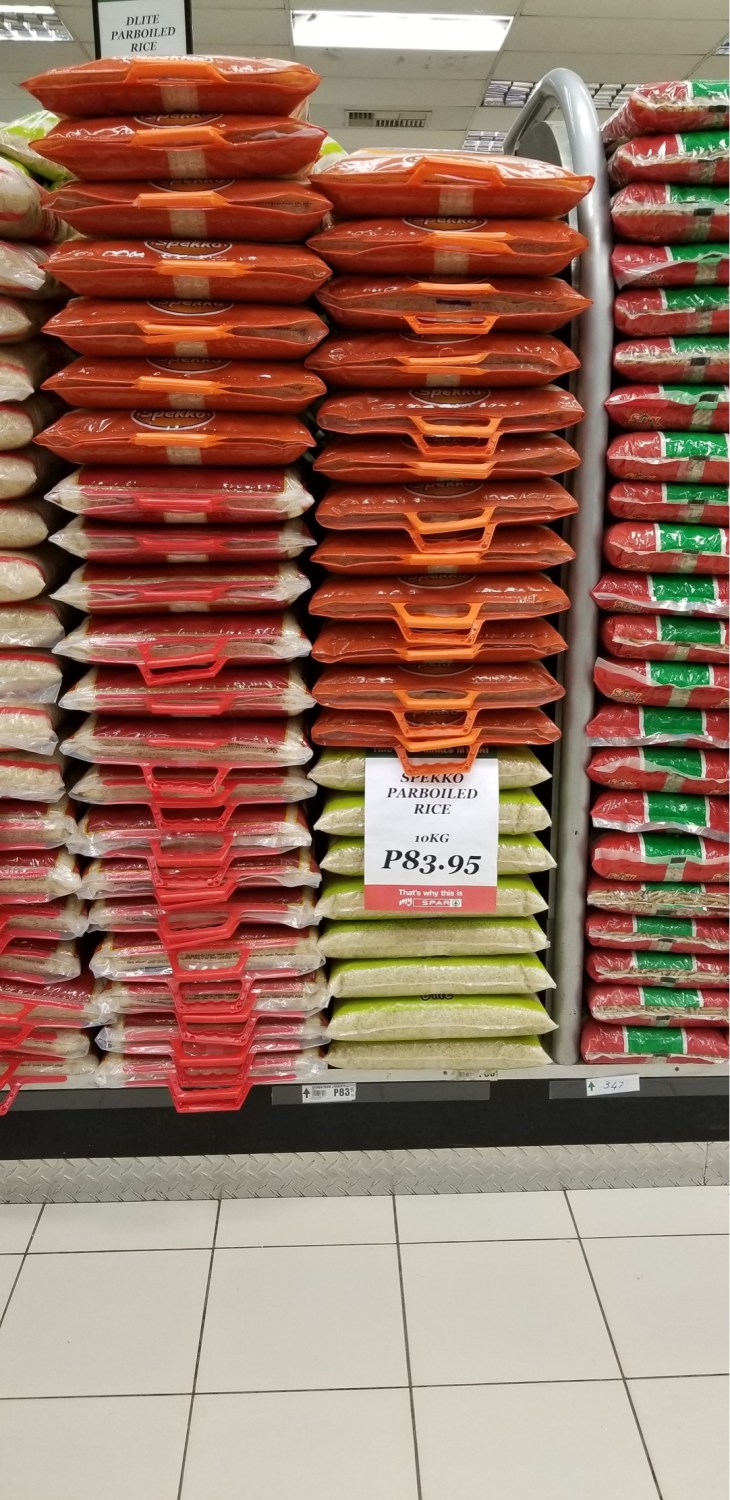
We stopped at a local super market to pick up groceries for camp for the next few days and exchanged currency. I was surprised to see the macaroni and rice sold in such large quantities.
We stayed at the campgrounds of the Chobe Safari Lodge. After setting up camp, we saw a herd of elephants in the distance not far from our campsite. We watched the sunset and enjoyed the setting as well as each other’s company.


Saturday, July 21
After breakfast, we left for Victoria Falls. The $30 entrance fee was covered by Intrepid Tours. We rented ponchos, knowing that we would be drenched at times from the spray and mist from the falls. We started from the back, by the bridge. The walk was very wet and sometimes difficult to see at the beginning, but as we moved toward the entrance, the views became spectacular. I was so greatful for cleats skies!


Last fall, I was invited to apply for the Catherine Miller Explorer Award. This year the Stanley Foundation bestowed three awards in honor of Catherine Miller, a well-known teacher, activist, and world traveler. In January, I was elated to be selected as one of the recipients of the award. I was allowed to select any region of the world to focus on cultural exploration.
When I began teaching, I wanted to help others find their world view, but the more I travel, I realize that I am still developing my own world view. By reaching beyond my previous experiences and embracing an environment to which I have not yet been exposed, I want to examine the geology, the flora and fauna, and most importantly, to meet other people froma different region of the world. I want to study the problems of a different culture and observe how they problem solve. I want to listen to their stories and add to my repertoire so that I can share more of my own. I have selected South Africa, Namibia, Botswana, and Zimbabwe as a destination choice because the journey would provide a geographical area of study unlike any I have ever experienced.
A large part of South Africa represents one of the world’s continental fragments. Records of continent-continent collisions through billions of years of history are evident throughout the country. Deposited when the first dinosaurs emerged onto land, sediments and lavas cover a signifcant portion of the country. North of the ancient geology, an array of wild life teems Botswana as thousands of animals migrate across the landscape. I imagine breathtaking views while navigating a mokoro (a canoe) through the Okavango Delta. Standing near one the Seven Natural Wonders of the World, the Victoria Falls, and listening to the roar of the water falling over the cliffs into the Zambezi River will be incredible.
Not only do I welcome the sights I will see and the people I will meet, I am eager to grow personally and professionally. Although I have traveled abroad, my travels have been limited to cultures where customs are similar to my own. Significant growth occurred in my life when I faced unknown challenges. Personal physical obstacles that I have encountered include cresting Mt. Sacajawea, Montana at 9,800 ft. or mountain biking along the Monarch Crest Trail, 11,300 ft. in Colorado last summer. Facing physical challenges taught me to be more mindful of my capabilities. I recall feeling insecure the first time I traveled to Madrid, Spain on my own. Yet, as I opened up to attempting new experiences, I felt accomplished at even small tasks, such as counting back change in Spanish, a language in which I was never formally trained. Expanding my boundaries by traveling to another continent that vastly differs my own, I will challenge my world view and myself to move beyond my comfort zone. Open-minded to transform my world view, I am elated to discover the allure of southern Africa in all aspects – culture, adventure, geology and wildlife.

 Be Curious!
It looks like your having the best time!!! Ms.Baker is nice I like her you should ft us (5th period)
LikeLike